

When traditional pressure sensors fail in extreme environments, silicon-on-sapphire pressure sensors emerge as the ultimate solution for mission-critical applications. From the manufacturing floors of St. Louis to the offshore platforms of the Gulf Coast, engineers face an increasingly complex challenge: measuring pressure accurately in conditions that destroy conventional sensors. With temperatures reaching 392°F, pressures exceeding 72,500 psi, and corrosive environments that eat through standard materials, the limitations of traditional piezoresistive sensors become painfully clear.
SUCO ESI North America, with over 80 years of German engineering heritage and offices in St. Louis, MO, and Deerfield Beach, FL, offers ESI pressure sensors built on Silicon-on-Sapphire technology for extreme environment measurement. This comprehensive guide explores how Silicon-on-Sapphire (SoS) technology solves critical measurement challenges across aerospace, oil & gas, hydrogen, and industrial applications where sensor failure simply isn’t an option.
What Makes Silicon on Sapphire Pressure Sensors Revolutionary?
 The Science Behind Superior Performance
Silicon-on-sapphire pressure sensors represent a fundamental breakthrough in pressure measurement technology. Unlike traditional piezoresistive sensors that rely on adhesive bonding—a primary failure point—SoS technology creates a molecular bond between silicon and sapphire substrates. This eliminates the degradation issues that plague conventional sensors operating in harsh environments.
The sapphire substrate provides exceptional properties:
- Hardness rating of 9: on the Mohs scale (approaching diamond at 10)
- Chemical inertness: resistant to acids, bases, and corrosive gases
- Temperature stability: stable performance over wide temperature ranges; the HI5000 is rated for operation from -40°C to +200°C
- Mechanical strength: withstanding extreme shock and vibration
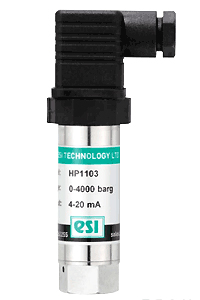
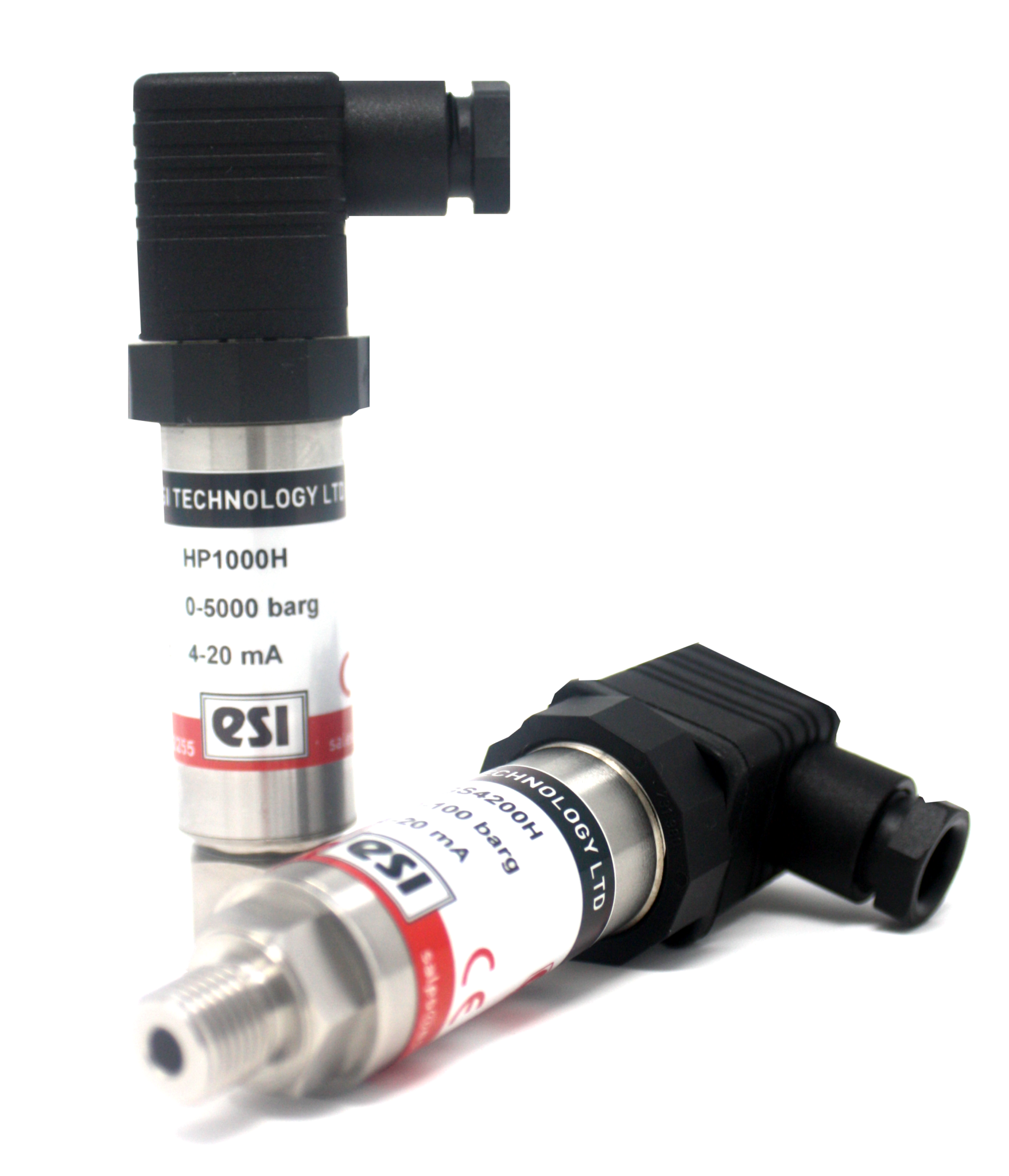
SUCO ESI’s HP1000 series demonstrates these capabilities with pressure ranges up to 72,500 psi and exceptional long-term stability.
Manufacturing Excellence
SUCO ESI North America’s Technical Heritage
Part of the SUCO GROUP, SUCO ESI North America draws on SUCO’s more than 80 years as a specialist manufacturer in the field of fluid and transmission technology. SUCO pressure switches are designed and manufactured in Bietigheim-Bissingen, Germany, and ESI pressure transducers are manufactured in Wrexham, UK. In North America, SUCO ESI serves customers from its main office in St. Louis, Missouri and its office in Deerfield Beach, Florida.
 Quality Systems and Certifications
SUCO ESI North America’s commitment to precision extends beyond technology to comprehensive quality systems:
- AS9100D certification of ESI’s Wrexham, UK facility for the design and manufacture of pressure transmitters and transducers
- ATEX and IECEx approval for explosive atmospheres on selected models
- ISO 9001:2015 certified quality systems at SUCO and ESI
- DNV marine type approval for the GS4200/HP1000, PR3110, PR3441 and PR3900 series
- NSN-numbered products for military contractors
These certifications enable penetration into regulated industries where safety and reliability justify premium pricing over commodity alternatives.
Critical Applications Where Silicon on Sapphire Excels
Aerospace: Where Failure Isn’t an Option
 The aerospace industry demands pressure sensors that operate reliably across extreme temperature ranges while withstanding intense vibration and shock loads. Commercial aircraft engines subject sensors to temperatures from -65°C at altitude to +125°C in engine compartments, with pressure variations from near-vacuum to 50+ psi.
Key aerospace applications include:
- Engine monitoring
- Hydraulic system controls enabling fly-by-wire technology
- Environmental control systems maintaining cabin pressurization
- Landing gear systems requiring shock-resistant operation
SUCO ESI’s GS4200, built on Silicon-on-Sapphire sensor technology, lists aerospace and aviation testing among its applications.
Oil & Gas: Surviving the Depths
Subsea and downhole applications create some of the most challenging environments for pressure measurement. Operating at depths exceeding 9,000 meters with pressures reaching 29,000 psi and temperatures up to 200°C, conventional sensors experience rapid degradation that leads to costly intervention requirements.
Downhole challenges solved by SoS technology:
- Extreme pressure resistance up to 29,000 psi (2,000 bar) on the HI5000
- Temperature capability with operation up to 392°F (200°C)
- Corrosion resistance from NACE certified materials on the HI5000
- Long-term reliability reducing intervention costs
The HI5000 Downhole Pressure Transducer demonstrates SUCO ESI’s extreme environment expertise, handling 29,000 psi and 392°F in a compact package with a maximum length of 58 mm.
Hydrogen Economy: The Next Frontier
 The emerging hydrogen economy presents unique challenges through hydrogen embrittlement and permeation effects that cause traditional sensors to fail or drift significantly. Hydrogen fuel cell vehicles operate at 700 bar (10,150 psi) while industrial hydrogen processes require sensors with 20+ year service life.
Hydrogen-specific requirements:
- Material compatibility preventing embrittlement
- Permeation resistance maintaining accuracy over time
- Safety certification ATEX approval for explosive atmospheres
- Precision control enabling efficient fuel cell operation
SUCO ESI’s GS4200H series provides hydrogen-compatible sensors with titanium alloy construction and hydrogen compatibility testing to ISO 11114.
Industrial Applications: Built to Last
Manufacturing environments subject pressure sensors to constant vibration, temperature cycling, and exposure to industrial chemicals. Construction equipment, mobile hydraulics, and process industries require sensors that maintain accuracy despite harsh operating conditions.
Industrial application benefits:
- Shock resistance for high shock and vibration inputs
- Vibration tolerance maintaining accuracy in mobile equipment
- Chemical compatibility operating in aggressive process media
- Long-term stability for consistent readings
Why Silicon on Sapphire Outperforms Traditional Technologies
Eliminating Common Failure Modes
Traditional piezoresistive sensors fail through predictable mechanisms that silicon on sapphire technology addresses at the fundamental level:
- Adhesive Bond Degradation Conventional sensors use organic adhesives to bond sensing elements, creating temperature-sensitive weak points. SoS technology employs molecular bonding that remains stable across extreme temperature ranges.
- Temperature-Induced Drift Standard sensors require complex compensation circuits that themselves drift over time. Sapphire’s exceptional thermal stability minimizes temperature effects without additional circuitry.
- Mechanical Stress Concentration Traditional designs create stress points that lead to accuracy degradation. The monolithic SoS structure distributes stress evenly across the sensing element.
- Chemical Attack Process media can attack standard sensor materials, causing calibration drift and eventual failure. Sapphire’s chemical inertness provides superior resistance to acids, bases, and solvents.
Economic Benefits That Matter
Silicon on sapphire pressure sensors can deliver a return on investment through:
- Stable long-term performance reducing maintenance costs
- Improved process efficiency through superior accuracy and stability
- Reduced downtime preventing catastrophic failures in critical applications
- Enhanced safety meeting stringent certification requirements
Implementation Best Practices
Selection Criteria for Optimal Performance
Choosing the right silicon on sapphire pressure sensor requires evaluating multiple parameters:
Pressure Range Sizing:
- Size sensors to 60-70% of full scale for optimal accuracy
- Consider maximum operating pressure and potential overpressure conditions
- Account for static head pressure in liquid applications
Environmental Considerations:
- Temperature range including ambient and process variations
- Chemical compatibility with process media
- Vibration and shock requirements
- Electrical area classification (hazardous/non-hazardous)
Output Signal Selection:
- 4-20mA for long cable runs and industrial systems
- 0-10V for laboratory and precision applications
- Digital protocols for smart system integration
Installation Guidelines for Maximum Reliability
Proper installation prevents many pressure sensor problems:
Mounting Orientation:
- Position to minimize temperature effects
- Avoid stress concentration at process connections
- Provide vibration isolation where required
- Ensure adequate environmental protection
Electrical Connections:
- Use appropriate cable gland ratings (IP65+ outdoor)
- Implement proper grounding and shielding
- Verify power supply specifications and stability
- Consider surge protection in high-energy environments
Process Connections:
- Tighten to the torque value given on the product datasheet
- Use appropriate thread sealant for media compatibility
- Install pressure snubbers for pulsating applications
- Consider diaphragm seals for corrosive media
Regulatory Compliance and Global Standards
International Certification Requirements
Global markets demand comprehensive certification portfolios:
European Markets (ATEX):
- Equipment Protection Level (EPL) classification per EU ATEX Directive 2014/34/EU
- Ex marking with appropriate gas groups (IIC/IIB/IIA)
- Temperature classification (T1-T6) for explosive atmospheres
- CE marking for machinery directive compliance
North American Standards (CSA/UL):
- Class I, Division 1/2 hazardous location approval
- Intrinsically safe or explosion-proof design
- NEMA 4X enclosure rating for outdoor applications
- FCC Part 15 for wireless communication devices
International Markets (IECEx):
- Global mutual recognition reducing certification complexity
- Simplified approval process for multiple countries
- Harmonized standards based on IEC 60079 series
- Cost-effective global market access
Industry-Specific Standards
Different industries impose additional requirements:
Aerospace (AS9100):
- First Article Inspection (AS9102) documentation
- Key characteristics identification (AS9103)
- Counterfeit parts prevention programs
- Configuration management throughout product lifecycle
Medical Devices (ISO 13485):
- Biocompatibility testing per ISO 10993
- Risk management per ISO 14971
- Sterilization compatibility verification
- Clinical evaluation and post-market surveillance
Industrial Automation Standards:
- International Society of Automation (ISA) cybersecurity standards
- American Petroleum Institute (API) oil & gas requirements
- Process safety standards for critical applications
Frequently Asked Questions
What makes silicon on sapphire better than piezoresistive sensors?
Silicon on sapphire pressure sensors eliminate the fundamental limitations of piezoresistive technology through molecular bonding instead of adhesive bonding, sapphire’s superior material properties, and exceptional long-term stability. This results in excellent long-term stability, virtually no hysteresis, and, on models such as the HI5000, operation up to 392°F (200°C).
How do I justify the higher cost of SoS sensors?
The case rests on improved process efficiency through better accuracy and stability, fewer failures in critical applications, and meeting safety and regulatory requirements.
Are silicon on sapphire sensors suitable for hydrogen applications?
Yes, SUCO ESI’s hydrogen-compatible sensors feature specialized materials and construction to prevent hydrogen embrittlement and permeation. The GS4200H series includes titanium alloy construction and hydrogen compatibility testing to ISO 11114.
What certifications do I need for international markets?
Requirements vary by region: Europe requires ATEX certification, North America needs CSA/UL approval, and IECEx provides global recognition. SUCO and ESI quality systems are certified to ISO 9001:2015, ESI’s Wrexham facility is AS9100D certified, and ATEX- and IECEx-approved versions are available for selected models.
How often should I calibrate silicon on sapphire sensors?
SoS sensors are known for excellent long-term stability, but no single calibration interval fits every application. Follow your own calibration program and any industry or regulatory requirements that apply to your process.
Can SoS sensors integrate with modern control systems?
Silicon on sapphire pressure sensors integrate with modern control systems through stable analog outputs, and selected models offer digital interfaces: USB on the GD4200 and RS-485 on the GS4400/GS4500, HP1400 and PR3930.
Choose SUCO ESI North America for Mission-Critical Applications
When pressure measurement failure isn’t an option, silicon on sapphire pressure sensors from SUCO ESI North America provide the reliability, accuracy, and longevity that mission-critical applications demand. With over 80 years of engineering expertise, international certifications, and offices in St. Louis, MO and Deerfield Beach, FL, SUCO ESI delivers precision pressure solutions that perform when traditional sensors fail.
Follow SUCO ESI on LinkedIn for the latest updates on silicon on sapphire pressure sensor technology, industry applications, and technical insights from our engineering team.
Call today to discover how silicon on sapphire pressure sensors can improve your process reliability, reduce maintenance costs, and enhance safety in applications where precision matters most.