
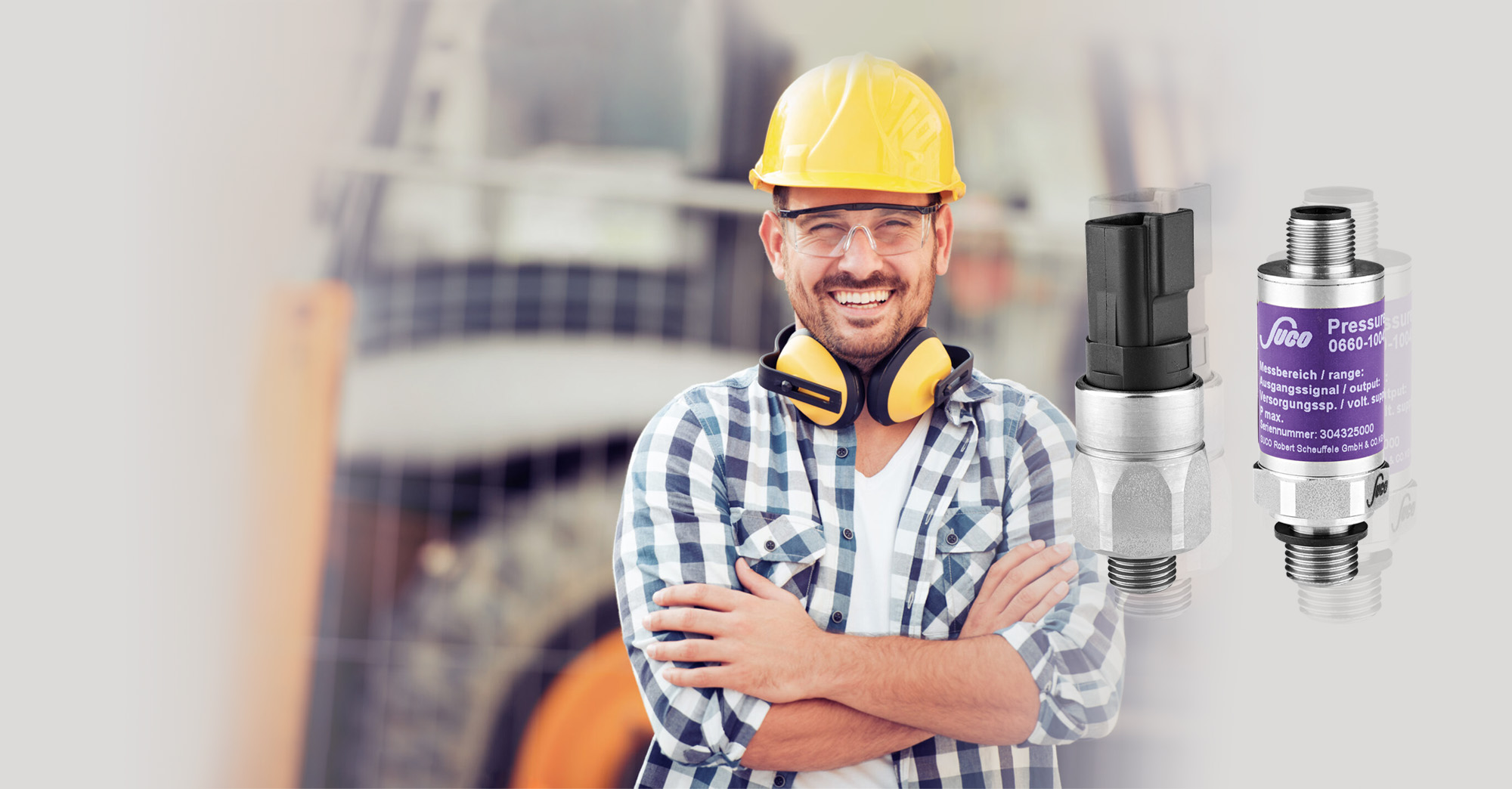
Diaphragm pressure switches are the workhorse sensing element behind reliable pressure control in demanding industrial systems. By using a flexible diaphragm to detect pressure changes and actuate a switching mechanism, they deliver accurate, repeatable performance across hydraulic, pneumatic, and process applications — making them a preferred choice for engineers in oil & gas, construction, and heavy industrial environments where process reliability is non-negotiable.
Key Takeaways
- Diaphragm pressure switches offer superior media compatibility and sensitivity compared to piston-type designs, especially at lower pressure ranges.
- Proper material selection — stainless steel, PTFE, or Hastelloy — is critical when switching corrosive or aggressive process media.
- ATEX-certified diaphragm pressure switches are essential in explosive atmospheres found in oil & gas and chemical processing environments.
- Mechanical pressure switches remain the reliable backbone of safety shutdown and alert systems where simplicity and fail-safe operation matter.
- SUCO ESI North America’s German-engineered diaphragm switches are built to perform in extreme pressure, temperature, and media conditions.
 Why Diaphragm Design Matters in Pressure Switching
Not all pressure switches are built the same way. Inside a mechanical pressure switch, the sensing element determines everything — accuracy, media compatibility, response range, and service life. The diaphragm design stands apart because it separates the process media entirely from the switching mechanism.
A thin, flexible membrane deflects under applied pressure. That deflection transfers mechanical force to a snap-action switch element, which opens or closes the electrical circuit at a defined setpoint. This isolation of media from mechanism is not just elegant engineering — it is a fundamental safety and reliability advantage.
In applications where process fluid is corrosive, viscous, or contaminated with particulates, a diaphragm prevents those media from reaching internal switch components. Piston-type designs, by contrast, require tighter clearances that can be compromised by fouling or corrosion over time. Diaphragm switches handle these environments with a longer maintenance interval and more consistent setpoint accuracy.
Engineering Note
Diaphragm pressure switches are particularly well-suited to low-to-medium pressure ranges — typically from vacuum up to 600 bar depending on design — where the membrane’s elastic deflection provides excellent sensitivity and repeatability. For applications above this range, alternative sensing geometries should be evaluated with a qualified instrumentation engineer.
Diaphragm Materials: Getting the Selection Right
The diaphragm material defines the switch’s chemical and thermal compatibility. This is one of the most critical engineering decisions when specifying a pressure switch for industrial service. A mismatch here leads to premature failure — or worse, a safety event.
| Diaphragm Material | Typical Applications | Key Advantage |
|---|---|---|
| 316L Stainless Steel | Hydraulic systems, water treatment, general process | Excellent corrosion resistance, high cycle life |
| PTFE-Coated | Chemical processing, aggressive acids/bases | Broad chemical inertness |
| Hastelloy C276 | Offshore, chloride-rich environments | Resistance to pitting and crevice corrosion |
| NBR / FKM (Elastomeric) | Pneumatic and light hydraulic systems | Cost-effective, good flexibility at low pressures |
In hydraulic systems using synthetic fluids or fire-resistant hydraulic oils, elastomeric diaphragms may swell or degrade. Stainless steel diaphragms are typically specified instead. For offshore oil & gas, where seawater and chloride exposure is constant, Hastelloy or duplex stainless becomes the engineering baseline, not an upgrade.

Heavy-Duty Applications: Where Diaphragm Switches Prove Their Worth
Hydraulic Power Systems
In hydraulic circuits — mobile equipment, industrial presses, or offshore control systems — pressure switches serve as the guardians of system integrity. They trigger pump start/stop sequences, activate alarm conditions, and protect downstream components from overpressure events.
Diaphragm designs handle the pulsating pressure profiles common in hydraulic systems better than many alternatives. Their snap-action switching provides clean, decisive signal transitions without the contact bounce that degrades PLC inputs over time. According to the National Fluid Power Association, hydraulic system failures account for a significant proportion of unplanned downtime in mobile and industrial equipment — reliable pressure switching is one of the most effective controls against that outcome.
Oil & Gas Processing
From wellhead monitoring to separator control and pipeline safety systems, diaphragm pressure switches operate in some of the harshest environments on earth. High-pressure sour gas service — where hydrogen sulfide is present — demands NACE-compliant materials throughout. High ambient temperatures, vibration, and the ever-present risk of explosive atmospheres make ATEX certification not a checkbox exercise, but a genuine life-safety requirement.
ATEX-certified versions of SUCO ESI North America’s diaphragm pressure switches are available for selected series, such as the explosion-proof Series 0344 (ATEX II 2G Ex db IIC T6/T5 Gb, gas zones 1 and 2) and the intrinsically safe Series 0396. ATEX certification is the essential credential for any switch placed in Zone 1 or Zone 2 classified locations. This certification, governed by the European ATEX Directive and internationally recognized under IECEx, confirms that the switch has been independently tested to prevent ignition of surrounding flammable atmospheres. The OSHA Process Safety Management standard mandates rigorous control of ignition sources in these environments — the right pressure switch selection is part of that compliance picture.
Construction and Mobile Equipment
Excavators, cranes, concrete pumps, and drilling rigs all depend on hydraulic pressure switching for operator safety and machine protection. Diaphragm pressure switches on these platforms face constant mechanical shock, wide temperature swings, and contaminated hydraulic fluids. The robust construction of industrial-grade diaphragm switches, combined with vibration-resistant snap-action mechanisms, keeps these machines operating reliably across demanding field conditions.
Speak with a Pressure Switch Engineer
Tell us your application requirements — media, pressure range, environment — and SUCO ESI North America’s technical team will help you specify the right diaphragm pressure switch for the job.
How Diaphragm Switches Integrate Into Control Systems
A diaphragm pressure switch delivers a discrete output — open or closed — at a defined setpoint. This simplicity is a core reliability advantage. Unlike pressure transducers, which produce a continuous analog or digital signal requiring interpretation by a controller, a mechanical pressure switch acts directly. It can trigger a relay, annunciator panel, or safety circuit without any additional signal conditioning.
Pro Tip
For applications requiring both an alarm function and continuous process monitoring, engineers often specify a diaphragm pressure switch alongside a pressure transducer. The switch handles the hardwired safety function — independent of the PLC — while the transducer feeds process data to the control system. This architecture improves safety integrity and is consistent with IEC 61511 functional safety principles.
Adjustable differential — the pressure band between switch actuation and reset — is a key specification parameter. A narrow differential suits tight process control. A wider differential prevents rapid cycling (hunting) in systems with inherent pressure fluctuation. Getting this right during the design phase avoids nuisance trips in service. SUCO ESI North America’s engineering team provides application support to help specify differential settings correctly for each installation.
The diaphragm separates the process from the mechanism — and that separation is where long-term reliability lives.
Selecting the Right Diaphragm Pressure Switch
1
Define the Pressure Range and Setpoint
Establish the operating pressure range, the required switch setpoint, and the allowable differential. Confirm whether the application requires field adjustment or fixed factory calibration.
2
Identify the Process Media
Document the fluid — hydraulic oil, water, gas, chemical — and confirm compatibility with diaphragm and wetted body materials. Include temperature range and any contamination concerns.
3
Assess the Installation Environment
Determine ambient temperature extremes, vibration levels, ingress protection requirements, and whether the location is classified as a hazardous area requiring ATEX certification.
4
Specify Electrical Requirements
Confirm supply voltage, switching current, and contact configuration — SPDT, SPST, or other. Confirm whether gold contacts are needed for low-current logic signal switching.
5
Engage Application Engineering
Work with a qualified industrial pressure switch supplier to review the full specification before ordering. Custom configurations are common for demanding applications.
SUCO ESI North America: German Engineering in Demanding Environments
SUCO ESI North America brings German engineering precision to every pressure switch we manufacture. Our diaphragm pressure switches are built for industrial environments where sensor failure means process shutdown, safety incidents, or expensive equipment damage. We don’t offer off-the-shelf solutions as a one-size-fits-all answer — we work with engineers to match the right design to the real application requirements.
Our product range covers heavy-duty pressure switches for hydraulic systems, ATEX-certified designs for hazardous area installations, and chemically resistant configurations for aggressive media service. Every SUCO pressure switch carries the precision and reliability standard that has made German-manufactured instrumentation the benchmark for demanding global industries.
For engineers sourcing from an industrial pressure switch supplier, the specification conversation matters as much as the product itself. SUCO ESI North America’s technical team supports that conversation — from initial selection through to installation questions.
Frequently Asked Questions
What is the main advantage of a diaphragm pressure switch over a piston-type design?
Diaphragm pressure switches isolate the process media from the switching mechanism, which makes them better suited to corrosive, viscous, or contaminated fluids. They also offer better sensitivity at lower pressure ranges and typically require less maintenance because there are no tight-clearance components that can foul or corrode over time.
When is ATEX certification required for a pressure switch?
ATEX certification is required whenever a pressure switch is installed in a location classified as a hazardous area — typically Zone 1 or Zone 2 for gas, or Zone 21/22 for dust. These are environments where flammable gases, vapors, or combustible dust may be present. ATEX certification confirms the switch is designed to prevent ignition of the surrounding atmosphere.
How do I choose the correct diaphragm material for my application?
Diaphragm material must be compatible with the process fluid’s chemical composition, temperature range, and pressure. Stainless steel suits most hydraulic and general process applications; PTFE-coated or Hastelloy diaphragms are specified for aggressive chemical service; elastomeric materials are used in low-pressure pneumatic applications. Engage your supplier’s application engineering team when in doubt — material mismatch is one of the leading causes of premature switch failure.
Can a diaphragm pressure switch replace a pressure transducer in a control system?
Not directly — they serve different functions. A pressure switch delivers a discrete on/off signal at a fixed setpoint, while a pressure transducer provides a continuous analog or digital output for process measurement and control. In safety-critical systems, it is common practice to use both: the pressure switch for hardwired safety functions and the transducer for process monitoring.
What does adjustable differential mean on a pressure switch?
Differential is the pressure band between where the switch actuates on rising pressure and where it resets on falling pressure. An adjustable differential allows engineers to tune this band for the specific application — a narrow differential for tight process control, or a wider differential to prevent rapid cycling in systems with natural pressure variation. Specifying the correct differential during design avoids nuisance trips in service.
Speak with a Pressure Switch Engineer
Tell us your application requirements — media, pressure range, environment — and SUCO ESI North America’s technical team will help you specify the right diaphragm pressure switch for the job.

About SUCO ESI North America
SUCO ESI North America is an industrial pressure measurement technology specialist serving oil & gas, aerospace, construction, and emerging hydrogen technology sectors. With German engineering precision and expertise in extreme environments and hazardous area compliance, the company provides reliable pressure switches, transducers, and sensors for demanding applications. Their solution-focused approach emphasizes technical customization, safety compliance, and expert support for engineering professionals and technical decision-makers who prioritize long-term reliability over cost. Visit sucoesi.com →