
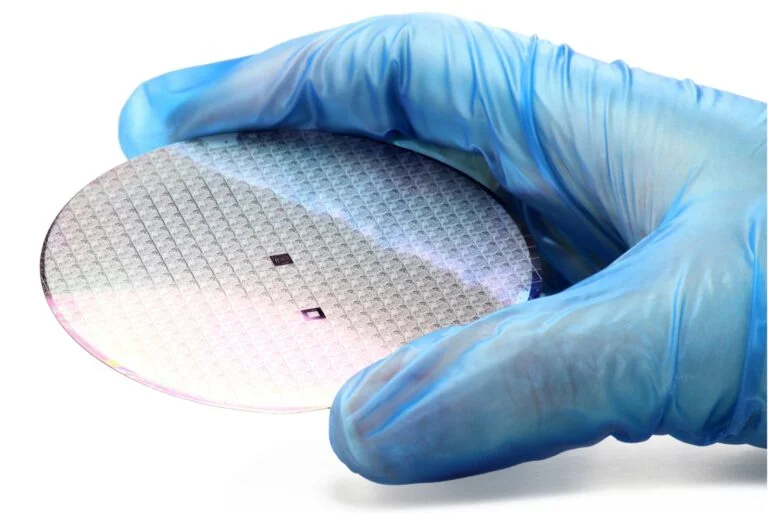
When standard pressure sensors fail in extreme environments—whether at 200°C in oil & gas downhole applications, under 20,000 PSI in hydrogen fuel systems, or after years of operation drifting beyond acceptable accuracy—engineers turn to Silicon-on-Sapphire pressure sensors. This advanced technology eliminates the fundamental failure mechanisms plaguing conventional piezoresistive sensors by molecularly bonding silicon strain gauges directly to sapphire substrates, creating measurement devices with virtually no hysteresis, excellent long-term stability, temperature capability up to 200°C on selected models, and mechanical ruggedness that withstands applications where traditional sensors simply cannot survive.
Understanding Silicon-on-Sapphire: The Science Behind Superior Performance
What Makes Silicon-on-Sapphire Technology Different?
Silicon-on-Sapphire pressure sensors represent a fundamental departure from conventional piezoresistive sensor construction. While traditional sensors bond silicon strain gauges to steel or silicon diaphragms using adhesives or glass frits that degrade over time, SoS technology uses epitaxial crystal growth to create a molecular bond between silicon and sapphire—literally growing silicon atoms directly onto the sapphire crystal lattice.
The Molecular Bonding Advantage
This molecular-level integration creates a monolithic structure where:
- No bonding agents exist to degrade, eliminating the #1 cause of sensor drift
- Thermal expansion mismatches disappear since silicon and sapphire are bonded at atomic level
- Mechanical stress coupling is perfect ensuring accurate pressure-to-resistance conversion
- Temperature compensation simplifies due to inherent material property matching
- Chemical barriers eliminate contamination pathways present in conventional designs
The Result: Silicon-on-Sapphire sensors exhibit virtually no hysteresis and excellent long-term stability over wide temperature ranges.
Sapphire: The Ideal Substrate Material
Sapphire (crystalline aluminum oxide, Al₂O₃) provides exceptional properties that make it the optimal pressure sensor substrate:
| Property | Sapphire | Silicon | Stainless Steel | Advantage |
|---|---|---|---|---|
| Hardness (Mohs) | 9 (second only to diamond) | 6-7 | 5-6 | Superior scratch, abrasion, and impact resistance |
| Chemical Inertness | Inert to acids, bases, solvents | Limited (Si etched by KOH) | Moderate (corrodes) | Universal media compatibility without degradation |
| Max Temperature | 2000°C melting point | 1414°C melting | ~1400°C | Supports high-temperature operation (up to 200°C on SUCO ESI’s HI2200 and HI5000) |
| Thermal Stability | Very low thermal expansion | Higher expansion | High expansion | Minimal temperature-induced stress and drift |
| Electrical Insulation | Excellent insulator | Semiconductor | Conductor | Prevents electrical leakage and noise |
| Optical Transparency | UV to IR transparent | IR transparent only | Opaque | Enables optical inspection and advanced diagnostics |
Engineering Insight: Sapphire’s 9 Mohs hardness means it resists scratching from virtually all industrial materials except diamond, cubic boron nitride, and other sapphires—critical for sensors exposed to abrasive slurries, particulate-laden gases, or harsh process streams that would rapidly degrade softer materials.
Silicon-on-Sapphire Sensor Construction and Manufacturing
Epitaxial Growth Process
Creating Silicon-on-Sapphire pressure sensors requires sophisticated semiconductor manufacturing techniques:
Step 1: Substrate Preparation
High-purity sapphire wafers are precision-polished to atomic-level smoothness (roughness <0.5 nm RMS), then heated to 1000-1200°C in ultra-high vacuum chambers to remove surface contamination and create perfectly ordered crystal surfaces.
Step 2: Silicon Epitaxy
Silicon atoms are deposited onto the sapphire surface using chemical vapor deposition (CVD) at temperatures around 1000°C. Under these conditions, silicon atoms bond directly to the sapphire crystal lattice, forming a continuous crystalline silicon layer 0.5-2 microns thick. This epitaxial process creates the molecular bond that eliminates adhesive degradation issues.
Step 3: Strain Gauge Patterning
Using photolithography and ion implantation (similar to integrated circuit manufacturing), piezoresistive strain gauges are created within the epitaxial silicon layer. These gauges are configured as a Wheatstone bridge that converts mechanical strain from pressure-induced diaphragm deflection into electrical resistance changes.
Step 4: Diaphragm Formation
The sapphire substrate is precision-machined (laser cutting, ultrasonic machining, or chemical etching) to create a thin diaphragm (50-500 microns depending on pressure range) that deflects under applied pressure while the thicker rim provides mechanical support.
Step 5: Assembly and Packaging
The SoS sensing element is mounted into stainless steel or specialty alloy housings, electrically connected, and sealed to create complete pressure sensors meeting environmental protection standards (IP65-IP68). SUCO ESI’s HI2000 series exemplifies this integration, with optional ATEX/IECEx intrinsically safe versions for hazardous area applications.
Performance Comparison: Silicon-on-Sapphire vs. Conventional Sensors
Long-Term Stability: The Defining Advantage
ESI’s datasheets describe the Silicon-on-Sapphire sensor as exhibiting virtually no hysteresis and excellent long-term stability over wide temperature ranges. No specific long-term drift figure is published; contact our engineering team for application-specific data.
Temperature Performance Comparison
Temperature affects sensor accuracy through multiple mechanisms—zero drift, span drift, and nonlinearity changes. Silicon-on-Sapphire pressure sensors dramatically outperform conventional alternatives:
Operating Temperature Range
- Standard Piezoresistive: -40°C to +125°C typical maximum
- Silicon-on-Sapphire: published ranges vary by product, for example media -50°C to +125°C on the HI2000, up to 135°C continuous on the HI6000, and up to 200°C on the HI2200 and HI5000
Temperature Coefficient of Zero (TCZ)
- Standard Piezoresistive: ±0.02% to ±0.05% FS per °C requiring complex compensation
- Silicon-on-Sapphire: typical thermal zero and span coefficients of ±0.005 %FS/°C on the HI2000
Temperature Coefficient of Span (TCS)
- Standard Piezoresistive: ±0.02% to ±0.03% reading per °C
- Silicon-on-Sapphire: typical thermal zero and span coefficients of ±0.005 %FS/°C on the HI2000
Real-World Impact: Downhole pressure sensors experience 150°C+ temperature swings during drilling operations. The HI5000 downhole transducer, for example, is rated for operation from -40°C to +200°C.
Hysteresis and Repeatability
ESI datasheets describe the SoS sensor as exhibiting virtually no hysteresis; the HI5000, for example, specifies non-linearity and hysteresis combined of ±0.150% of span maximum (Best Fit Straight Line method).
Control System Benefit: Virtually zero hysteresis eliminates “dead band” issues in closed-loop control systems, enabling tighter process control, reduced oscillation, and better product quality in pharmaceutical manufacturing, semiconductor fabrication, and precision hydraulic systems.
Applications Where Silicon-on-Sapphire Technology Excels
Oil & Gas: Extreme Pressure and Temperature
Downhole Pressure Monitoring
Oil wells reach depths of 30,000+ feet where temperatures exceed 200°C and pressures approach 30,000 PSI. Reliability is paramount. Silicon-on-Sapphire pressure sensors enable:
- Operation up to 200°C on the HI5000 downhole transducer
- Shock/vibration resistance surviving drill string impacts and well intervention operations
Subsea Production Systems
Subsea sensors face high hydrostatic pressure, saltwater corrosion, and little or no maintenance access. SUCO ESI’s subsea SoS transducers, such as the PR3914 and PR3915, are rated for submersion to 3,000 meters. SoS technology provides:
- Sapphire’s chemical inertness and titanium alloy wetted parts resisting seawater corrosion
- Long-term stability eliminating drift-induced safety margin erosion
- Wide operating range handling both installation (ambient) and operating (elevated) conditions
Aerospace: Reliability Over Decades
Commercial Aircraft Pressure Systems
Aircraft operate 30+ years with pressure sensors experiencing:
- Temperature cycling: -65°C at cruise altitude to +125°C in engine bays (thousands of cycles)
- Vibration exposure: 10-2000 Hz at 10-20g acceleration continuously
- Pressure cycling: Cabin pressurization 6-8 PSI differential 30,000+ cycles over service life
- Maintenance intervals: 5-10 year replacement cycles requiring exceptional stability
ESI Silicon-on-Sapphire pressure sensors offer:
- Manufacture under an AS9100D quality management system at ESI’s Wrexham, UK facility
- Sapphire’s mechanical strength providing inherent vibration resistance
- Excellent long-term stability over wide temperature ranges
Hydrogen Economy: Safety-Critical Measurement
The emerging hydrogen economy creates unprecedented pressure sensing challenges:
Hydrogen Fuel Cell Vehicles (700 bar / 10,150 PSI)
Silicon-on-Sapphire pressure sensors address unique hydrogen challenges:
- Titanium Wetted Parts: The GS4200H uses high-strength titanium alloy wetted materials
- Embrittlement Resistance: Materials tested for hydrogen compatibility per ISO 11114 in accordance with EC 79/2009 and EU 406/2010
- Long-term Stability: Exceptional long-term stability and reduced drift compared to conventional silicon sensors
- Fast Response: Real-time pressure monitoring during rapid refueling (3-5 minutes to fill 5 kg tank)
- Safety Certification: ATEX/IECEx-certified versions such as the GS4200EXH for zone 0 explosive atmospheres
Selecting the Right Silicon-on-Sapphire Sensor
When to Specify SoS Technology
Silicon-on-Sapphire pressure sensors provide maximum value when applications feature:
Specify SoS When:
- Operating temperatures exceed 125°C
- Temperature cycling range exceeds 100°C (e.g., -20°C to +150°C)
- Accuracy specifications tighter than ±0.5% required
- Sensor replacement costs exceed $10,000 (offshore, subsea, downhole, aerospace)
- Application involves corrosive media attacking standard sensor materials
- Hydrogen service requiring embrittlement resistance
- Extreme vibration/shock environments (construction, aerospace, mobile equipment)
Standard Sensors May Suffice When:
- Operating temperature always within -20°C to +80°C
- Accuracy requirements ≥±1.0% adequate
- Annual calibration acceptable and cost-effective
- Sensor replacement simple and inexpensive (<$200 total cost)
- Non-critical monitoring applications
- Short service life (1-3 years) acceptable
SUCO Silicon-on-Sapphire Products
 HI5000 Series: Extreme Environment Specialists
- Pressure Range: 0-400 bar (0-5,800 PSI) to 0-2,000 bar (0-29,000 PSI)
- Temperature: -40°C to +200°C operating
- Applications: Oil & gas downhole, geothermal, subsea and offshore
- Features: Compact design with a maximum length of 58 mm, titanium construction, long-term stability
- Learn More: HI5000 Downhole Transducers
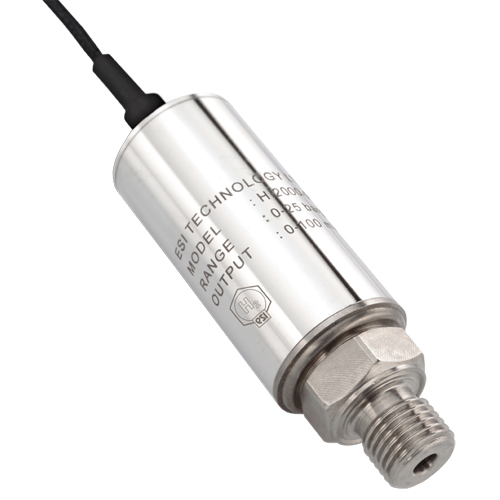 HI2000 Series: High-Precision Workhorses
- Pressure Range: 0-500 mbar to 0-1,500 bar (0-7.5 PSI to 0-20,000 PSI)
- Temperature: ambient -40°C to +85°C, media -50°C to +125°C
- Applications: Aerospace, oil & gas, subsea, laboratory
- Features: ±0.1% of span BFSL accuracy, optional ATEX/IECEx approval, multiple outputs
- Learn More: HI2000 High-Precision Transducers
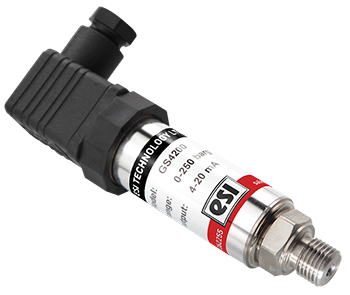 GS4200H Series: Hydrogen Specialists
- Pressure Range: Vacuum to 1,500 bar (20,000 PSI)
- Temperature: ambient -40°C to +85°C, media -50°C to +125°C
- Applications: Fuel cells, H₂ production, refueling stations
- Features: Titanium alloy wetted parts, H₂ tested per ISO 11114-2, ATEX/IECEx version available (GS4200EXH)
- Learn More: GS4200H Hydrogen Sensors
Frequently Asked Questions
Q: Can Silicon-on-Sapphire sensors be repaired or recalibrated?
A: Yes, SoS sensors can be recalibrated following standard procedures. Repairs depend on failure mode: electronic failures can often be repaired, while diaphragm damage (from extreme overpressure or impact) typically requires factory replacement. SUCO ESI offers repair and recalibration services.
Q: Do SoS sensors require special installation procedures?
A: Installation procedures for SoS sensors are identical to standard pressure sensors—proper torque on process connections, appropriate electrical wiring, and environmental protection. One consideration: sapphire is harder but more brittle than steel, so avoid dropping sensors onto hard surfaces and use proper mounting techniques. Follow manufacturer torque specifications to prevent mechanical stress-induced zero shifts.
Q: What happens if a Silicon-on-Sapphire sensor experiences overpressure?
A: Overpressure and burst ratings vary by product: for example, the GS4200H is rated for overpressure of 2x rated pressure, and both ports of the PR3920 withstand 1,000 bar overpressure with no damage. Check the datasheet for your model. Sustained overpressure 2-3x full scale may cause permanent zero or span shift requiring recalibration. Overpressure exceeding burst rating causes diaphragm fracture and sensor failure—same as any pressure sensor. For applications with frequent pressure spikes, specify sensors with appropriate overpressure protection or install inline snubbers.
Q: How does Silicon-on-Sapphire technology compare to thin-film sensors?
A: Thin-film sensors deposit metal strain gauges onto steel diaphragms, offering improvements over bonded foil gauges but still using adhesives subject to degradation. SoS technology eliminates adhesives entirely through molecular bonding, providing excellent long-term stability, higher temperature capability (up to 200°C on SUCO ESI’s HI2200 and HI5000), and better chemical resistance. Thin-film sensors cost less initially but don’t achieve SoS performance levels in extreme applications.
Partner with SUCO ESI: Silicon-on-Sapphire Technology Leaders
The combination of titanium sensing elements with Silicon-on-Sapphire pressure sensor technology has a long tradition at ESI. Our expertise extends beyond manufacturing to application engineering, helping customers solve complex measurement challenges with proven SoS technology.
Why Specify SUCO ESI SoS Sensors?
- Comprehensive Certifications: ATEX, IECEx and DNV on selected models; ISO 9001:2015 and AS9100D quality systems at ESI, Wrexham
- Custom Solutions: Engineering support for unique requirements
- North American Support: Offices in St. Louis, MO and Deerfield Beach, FL, with next-day delivery across North America
- Global Support: Serving the U.S., Canada, Mexico, and Latin America
- Technical Expertise: Real engineers with decades of experience
Get Expert Guidance Today
Whether you’re evaluating SoS technology for a new project or troubleshooting performance issues with existing sensors, SUCO ESI’s team provides the expertise to optimize your pressure measurement systems.
Phone: 1-800-473-7313
Website: www.sucoesi.com
Contact: Request Technical Support
LinkedIn: Connect with SUCO ESI
Related Resources:
- Complete Guide to Electrical Pressure Sensors
- Silicon-on-Sapphire Technology Overview
- Download Technical Datasheets
Silicon-on-Sapphire pressure sensors represent the pinnacle of pressure measurement technology, eliminating fundamental limitations of conventional sensors through advanced materials science and sophisticated manufacturing. When accuracy, reliability, and long-term stability matter most—in oil & gas, aerospace, hydrogen economy, and process industries—SoS technology delivers unmatched performance and lifecycle value.