

Across farmlands, irrigation networks, and rural water distribution systems, one small component quietly determines whether crops get water or pumps burn out: the pressure switch. Yet for all its importance, it’s frequently misunderstood—or worse, ignored until something fails.
So what does a pressure switch do, exactly? In the context of agricultural water pump systems, it does something remarkably precise: it monitors system pressure and automatically starts or stops the pump based on preset thresholds. That one function, executed reliably thousands of times a season, is what separates a well-managed irrigation system from one prone to costly downtime.
Understanding What a Pressure Switch Does in Agricultural Water Pump Systems
A pressure switch is an electromechanical or electronic device that opens or closes an electrical circuit in response to a change in fluid pressure. In agricultural pump applications, it acts as the system’s automatic governor—sensing when pressure drops below a minimum setpoint (indicating demand) and triggering the pump to start, then cutting power once pressure reaches the upper setpoint.
Think of it like a thermostat, but for water pressure instead of temperature. The switch continuously monitors pressure conditions and responds without human intervention.
Most agricultural systems use a two-setpoint model:
- Cut-in pressure: The lower threshold that triggers pump activation (commonly 20–40 PSI)
- Cut-out pressure: The upper threshold that shuts the pump off (commonly 40–60 PSI)
The range between these two points—called the differential—determines how frequently the pump cycles. A well-calibrated differential extends pump life and stabilizes system pressure throughout the irrigation network.
For a deeper look at how this switching mechanism works at the component level, see our guide on how pressure switches work and their operating principles.

Why the Pressure Switch Matters More Than Most Farmers Realize
Agricultural water systems operate under conditions that would stress most industrial setups: variable demand, wide temperature swings, exposure to particulates, and often minimal supervision. The pressure switch handles all of this automatically.
Here’s what’s at stake when the switch works correctly:
- Pump protection: Running a pump dry—without sufficient water—can destroy the motor in minutes. A pressure switch that detects low-pressure conditions can cut power before damage occurs.
- Energy efficiency: Continuous pump operation when demand doesn’t warrant it wastes electricity and accelerates wear. Automatic cycling based on pressure reduces energy consumption meaningfully over a full growing season.
- Consistent irrigation delivery: Crops respond to consistent water pressure at emitters and sprinkler heads. Unstable pressure creates uneven coverage, affecting yield.
- Pipe and fitting protection: Pressure spikes—often caused by rapid pump cycling without proper control—can rupture fittings or damage valves. A correctly set cut-out pressure prevents over-pressurization.
In commercial agricultural operations, these aren’t minor conveniences. They’re the difference between a productive season and an expensive equipment failure at the worst possible time.
> View Pressure Switches for Agriculture Equipment
How the Switching Mechanism Works in a Pump System
Inside a typical agricultural pump pressure switch, a sensing element; usually a diaphragm or piston—responds to system pressure. As pressure builds, the sensing element deflects against a calibrated spring. When deflection reaches the setpoint threshold, it actuates a snap-action electrical contact, either opening or closing the circuit.
Mechanical switches use this spring-loaded diaphragm approach and have been the workhorse of agricultural systems for decades. They’re simple, durable, and easy to adjust. Electronic pressure switches offer more precise setpoints, digital displays, and the ability to integrate with automation controllers; increasingly relevant as precision agriculture adoption grows.
It’s worth noting an important distinction here: a pressure switch provides a discrete on/off output. It differs from a pressure sensor or pressure transducer, which delivers a continuous analog or digital signal proportional to pressure. In basic pump control, the binary switching action of a pressure switch is exactly what’s needed—and it’s what makes these devices so reliable for straightforward automation tasks.
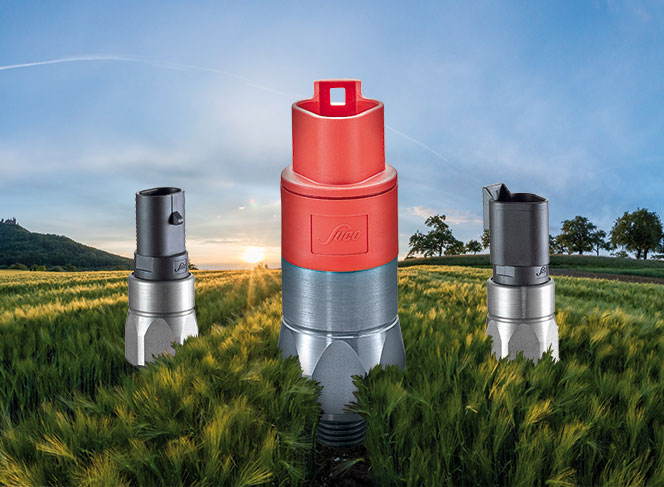
Common Agricultural Applications Beyond Simple Pump Start/Stop
While automatic pump cycling is the most familiar use, agricultural pressure switches serve several other critical roles:
Low-Pressure Shutdown Protection
In drip and micro-irrigation systems, a sudden pressure drop can indicate a broken line, clogged filter, or failed emitter. A pressure switch set at a minimum threshold can trigger an alarm or shut down the system before waterlogging or drought stress affects the crop.
High-Pressure Safety Cutoff
Over-pressurization is a real risk in systems fed by municipal lines or where pump output exceeds design capacity. A high-pressure cutoff switch prevents burst lines and protects downstream equipment.
Multi-Pump Staging
Larger irrigation networks often use multiple pumps in sequence. Pressure switches stage pump activation—bringing the second pump online only when pressure falls below a threshold the first pump can’t maintain alone. This approach extends equipment life and improves energy management.
Tank and Reservoir Level Management
When combined with pressure tanks (bladder or captive air tanks), pressure switches regulate fill cycles. The tank stores pressurized water, allowing minor draws without activating the pump; reducing short-cycling that would otherwise damage the motor.
Selecting the Right Pressure Switch for Agricultural Pump Systems
Not every pressure switch suits every agricultural application. Several factors determine the right specification:
- Pressure range: Select a switch rated for the maximum system pressure with appropriate margin. Undersized ratings shorten service life.
- Differential setting: A wider differential means fewer pump cycles but greater pressure variation at the point of use. Narrower differentials deliver more consistent pressure but increase cycling frequency.
- Electrical rating: The switch must handle the motor’s starting current, which can be 6–8 times the running current. Undersized contacts fail prematurely.
- Ingress protection: Agricultural environments expose switches to dust, water spray, and insects. An IP65 or higher rating is typically necessary.
- Material compatibility: Wetted parts should be compatible with the water quality—corrosion-resistant materials matter in high-mineral or treated water systems.
For those managing procurement decisions, reviewing common mistakes made when selecting industrial pressure switches can help avoid costly errors that aren’t always obvious until after installation.
It’s also worth evaluating whether a mechanical or electronic switch better suits your application. Understanding the differences between mechanical and electronic pressure switches is an important step in the selection process, particularly as agricultural automation becomes more sophisticated.
Installation and Maintenance Best Practices
A quality pressure switch poorly installed performs no better than a cheap one. A few practical guidelines:
- Mount close to the pressure tank: This minimizes pressure lag between the tank and the switch, improving responsiveness.
- Use a snubber or restrictor: These small fittings dampen pressure spikes that would otherwise hammer the sensing element and shorten switch life.
- Check and adjust setpoints seasonally: Crop type, growth stage, and ambient conditions affect optimal pressure settings. Irrigation systems aren’t “set and forget.”
- Inspect contacts annually: Arcing from motor starting currents can pit and corrode contacts. Inspect and clean or replace as needed.
- Verify the pressure tank pre-charge: A pressure tank with incorrect pre-charge air pressure forces the switch to cycle excessively, regardless of its settings.
Frequently Asked Questions
What happens when a pressure switch goes bad?
A failing pressure switch typically causes one of two problems: the pump won’t start even when pressure is low, or the pump runs continuously without shutting off. In agricultural systems, the second failure mode is particularly damaging—it can burn out a pump motor or over-pressurize the distribution network. Other symptoms include erratic cycling, the pump short-cycling rapidly, or a visible failure of the switch housing due to corrosion or water intrusion.
Does a pressure switch require power?
A pressure switch itself does not consume power in the traditional sense—it’s a passive switching device that opens or closes a circuit. However, it must be wired into the electrical circuit that powers the pump. The switch controls the flow of power to the motor; it doesn’t independently require a power supply to sense pressure. Electronic pressure switches with digital displays or relay outputs are an exception—these require a supply voltage to operate their electronics.
How do you tell if your pressure switch is working?
The simplest test is observational: with the system running, open a faucet or irrigation zone and watch whether the pump activates when pressure drops and stops when it’s restored. For a more direct test, use a multimeter to check continuity across the switch contacts at low pressure (should be closed/conducting) and at high pressure (should be open). You can also manually depress the sensing element on some mechanical switches to confirm contact operation. If the pump runs but system pressure never reaches the cut-out point, suspect a failing switch or incorrect setpoint—not always a pump problem.
Does a pressure switch have a reset?
Many pressure switches include a manual reset button, particularly those designed as safety cutoffs. After a low-pressure or high-pressure trip event, the switch latches in the off position and requires manual intervention to restart. This is intentional—it prevents automatic restart in conditions that could indicate a system fault. Standard pump control switches (those managing normal start/stop cycling) typically reset automatically once pressure returns to the cut-in range. Always check the manufacturer’s documentation to understand the reset behavior of your specific switch model.
Technical Support From Application to Solution
Not sure which pressure switch is right for your agricultural water pump?
Our engineering team can help you review your application requirements and identify the appropriate solution. We can assist with pressure specifications, switching requirements, connections, and other critical parameters so you can make a confident component selection.
SUCO serves customers throughout the USA, Canada, and Latin America, providing technical expertise and pressure switch solutions for agricultural, industrial, and water-management applications.
Looking for a reliable pressure switch for your agricultural water pump? Contact SUCO ESI North America to discuss your application with our technical team.
Email: sales@sucoesi.com