
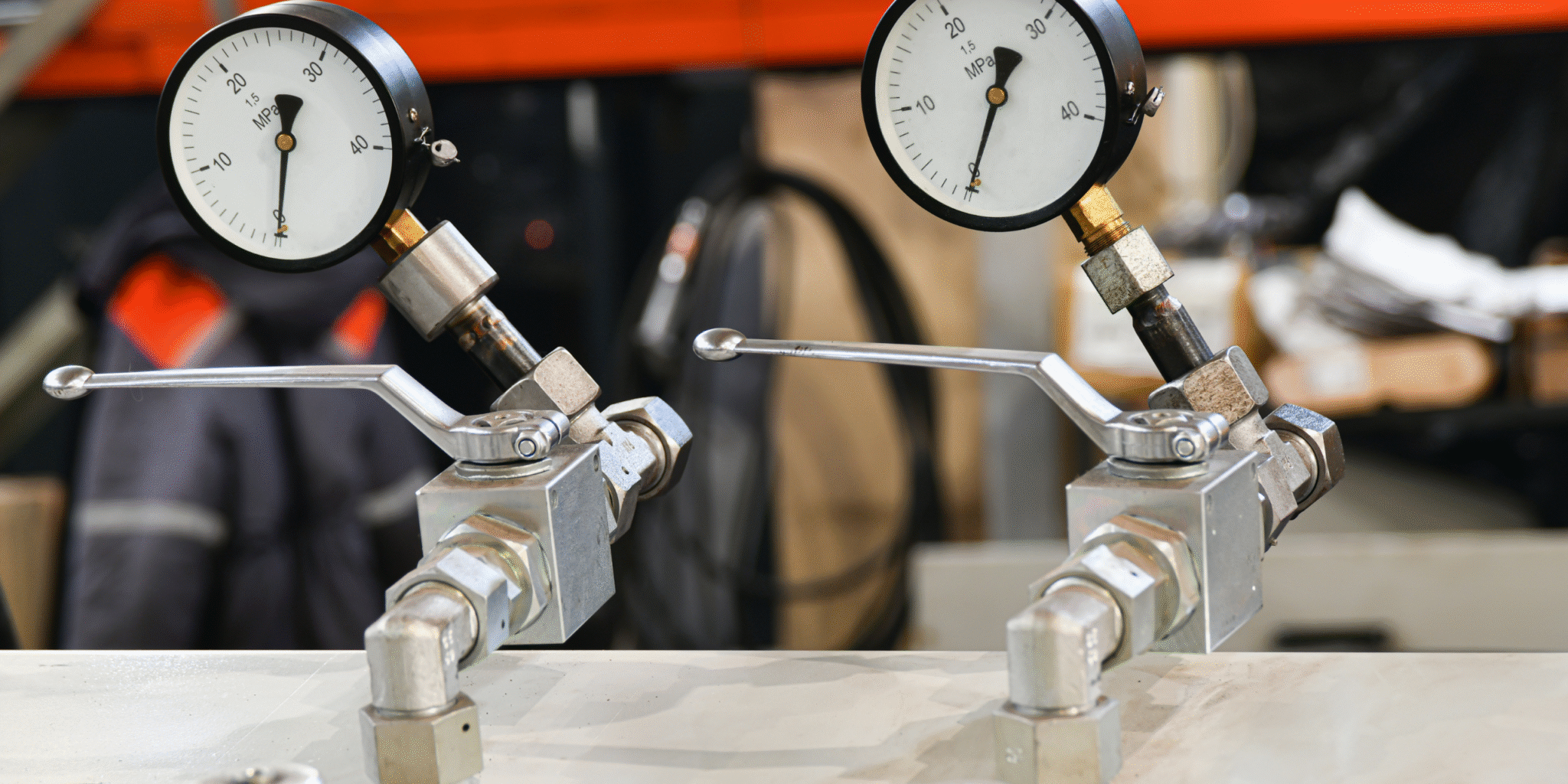
Proper pressure switch adjustment and calibration are essential for maintaining safe, reliable, and efficient industrial systems. Whether you’re working with hydraulic equipment, pumps, compressors, or process control systems, an incorrectly calibrated pressure switch can lead to equipment failure, unplanned downtime, and costly repairs.
Our engineering team regularly assists customers with pressure switch setup, troubleshooting, and calibration. Below, we explain how mechanical pressure switches work, what affects their accuracy, and the best practices for proper adjustment.
How Mechanical Pressure Switches Work
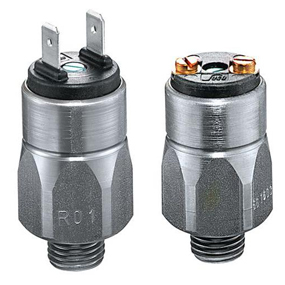 Mechanical pressure switches convert fluid pressure into mechanical movement that opens or closes an electrical circuit.
Inside the switch, a sensing element—typically a diaphragm, piston, or Bourdon tube—responds to pressure changes. As pressure increases, the sensing element moves against a calibrated spring. Once the pressure reaches the preset value, the switch activates and changes the electrical contact state.
Unlike electronic pressure switches, mechanical models operate without complex electronics, making them highly reliable in:
- High-vibration environments
- Extreme temperatures
- Heavy industrial applications
- Hazardous or explosive areas
- Understanding Switching Differential
Every mechanical pressure switch has a switching differential, also known as hysteresis or deadband.
This is the difference between the pressure at which the switch turns on and the pressure at which it turns off. The differential prevents rapid cycling and contact chatter, helping extend switch life and protect connected equipment.
Factors That Affect Calibration Accuracy
Several conditions can influence pressure switch performance and calibration accuracy.
Temperature Changes
Temperature affects springs, diaphragms, and internal components. Expansion and contraction can slightly shift switching points, which is why calibration should reflect actual operating conditions whenever possible.
Vibration and Mechanical Shock
Applications such as construction equipment, hydraulic machinery, and mobile systems expose pressure switches to constant vibration. Over time, vibration can affect switch settings and should be considered during routine maintenance inspections.
Pressure Media Characteristics
Different media behave differently. Liquids, gases, viscous fluids, and contaminated media can all influence switch response. Understanding the process conditions helps ensure accurate calibration and long-term reliability.
Tools Required for Accurate Calibration
Accurate adjustment requires the right equipment.
Recommended tools include:
- Certified pressure calibrator or deadweight tester
- Digital multimeter for verifying contact operation
- Appropriate adjustment tools for the switch model
- Correct fittings and adapters
- ATEX-certified environments require non-sparking tools to maintain hazardous area compliance during adjustment procedures.
For best results, the calibration standard should be significantly more accurate than the pressure switch being tested.

Step-by-Step Pressure Switch Calibration
1. Record Existing Settings
Before making adjustments, document the current setpoint, switching differential, and any performance issues. Having a baseline makes troubleshooting much easier if further adjustments are required.
2. Isolate and Depressurize the System
Disconnect the pressure switch from the process and verify the system is fully depressurized. Follow all lockout/tagout and site safety procedures before proceeding.
3. Connect Calibration Equipment
Attach the pressure calibrator using suitable fittings and ensure all connections are leak-free. Even small leaks can affect calibration accuracy.
4. Verify the Current Setpoint
- Slowly increase pressure while monitoring both the calibrator and the switch output.
- Record the exact pressure at which the contacts change state. This is the current switch activation point.
5. Measure the Switching Differential
- Gradually reduce pressure and record the pressure at which the contacts return to their original state.
- The difference between the activation and deactivation pressures is the switching differential.
6. Adjust the Switch
Access the adjustment mechanism according to the manufacturer’s instructions.
In most mechanical pressure switches:
- Clockwise adjustment increases the setpoint.
- Counterclockwise adjustment decreases the setpoint.
Make small adjustments and retest after each change. Large adjustments can make calibration more difficult and reduce accuracy.
7. Verify Repeatability
- Cycle the pressure several times and confirm the switch activates consistently at the desired pressure.
- Reliable repeatability is one of the most important indicators of a properly calibrated pressure switch.
Critical Factors Affecting Calibration Accuracy
Temperature significantly impacts mechanical pressure switch performance. Materials expand and contract with temperature changes, altering spring tension and dimensional tolerances. Quality industrial mechanical switches compensate for temperature effects through material selection and mechanical design, but calibration must account for actual operating conditions.
Vibration introduces another complexity. Mobile hydraulic applications in construction equipment and agricultural machinery subject pressure switches to constant mechanical shock. Equipment operating in high-vibration environments benefits from secure mounting and regular calibration verification to maintain accuracy.
Calibration Tolerances and Acceptance Criteria
Setting tolerances for mechanical switches vary by model and pressure range, so check the tolerance on the switch’s datasheet; SUCO publishes it for each setting range. However, application requirements dictate actual tolerances. Safety-critical applications in oil and gas operations may require ±1% or tighter, while less critical applications might accept ±5%.
Calibration intervals are best set based on stability history, criticality, and manufacturer recommendations. Initial intervals of six months are common, extending to annual calibration for stable, non-critical applications.
Document everything. Record calibration date, technician name, equipment used, as-found conditions, as-left settings, and any anomalies observed. This documentation satisfies regulatory requirements and provides trending data that predicts future performance issues.

Application-Specific Calibration Considerations
Mobile hydraulic systems in construction and agricultural equipment present unique calibration challenges. These switches endure extreme vibration, temperature swings, and contamination. Calibration should occur at operating temperature when possible, and mounting hardware must be verified for proper torque and vibration resistance.
HVAC and refrigeration applications involve temperature extremes and diverse refrigerants. Calibrate switches with media compatible with actual system refrigerants, as different fluids exhibit varying pressure-temperature relationships. Building automation systems increasingly rely on mechanical pressure switches for safety interlocks where electronic failures could compromise occupant safety.
For hazardous area applications requiring ATEX certification, calibration procedures must maintain explosion protection integrity.
Never modify pressure switches in ways that compromise their certification. Adjustment procedures must follow manufacturer guidelines specifically addressing hazardous area compliance.
When to Replace Rather Than Adjust
Mechanical pressure switches have finite service lives. Repeated pressure cycling fatigues diaphragms and springs. Electrical contacts erode with each switching operation. Eventually, calibration cannot restore proper performance.
Replace switches that cannot achieve specified setpoints within adjustment range. If calibration brings the switch to tolerance only at extreme adjustment positions, internal wear has exceeded acceptable limits.
Replace switches exposed to pressure or temperature excursions beyond ratings. Overpressure events permanently deform diaphragms and springs. Temperature extremes alter metallurgical properties, compromising reliability even if immediate failure doesn’t occur.
Consider replacement for switches in critical safety applications approaching manufacturer-recommended service intervals. The cost of premature replacement is negligible compared to consequences of failure in safety-critical systems.
Regulatory Compliance and Safety Standards
The OSHA Control of Hazardous Energy standard requires proper lockout/tagout procedures during calibration work. Never adjust pressure switches on energized systems. Stored energy in pressurized systems can cause catastrophic component ejection and serious injury.
Industries with specific regulatory requirements must follow additional guidelines. Nuclear power, aerospace, and pharmaceutical manufacturing maintain stringent calibration documentation requirements. Ensure your procedures satisfy applicable regulations for your specific industry.
ATEX-certified pressure switches require particular attention during adjustment. Any modification affecting explosion protection invalidates certification. Use only approved adjustment procedures that maintain certification integrity.
Frequently Asked Questions
How often should mechanical pressure switches be calibrated?
Calibration intervals depend on application criticality, operating severity, and regulatory requirements. Safety-critical applications typically require six-month intervals. Non-critical applications in stable environments may extend to annual calibration. Establish intervals based on stability trending from initial frequent calibrations, gradually extending intervals as performance history demonstrates stability.
Can I adjust mechanical pressure switches without specialized calibration equipment?
No. Accurate adjustment requires certified pressure calibration equipment with documented traceability to national standards. Adjusting switches using system pressure gauges introduces errors that compromise safety and reliability. Quality calibrators provide accuracy necessary for proper adjustment and documentation required for regulatory compliance.
What causes mechanical pressure switches to drift out of calibration?
Multiple factors cause calibration drift. Diaphragm fatigue from pressure cycling alters mechanical properties. Temperature extremes affect spring tension and material dimensions. Vibration loosens adjustment mechanisms. Corrosive media attack diaphragms and internal components. Proper material selection and regular calibration verification minimize drift effects in demanding applications.
Do ATEX- and IECEx-certified pressure switches require special calibration procedures?
Yes. ATEX and IECEx certifications require calibration and maintenance procedures that preserve the equipment’s explosion protection integrity. Always use approved tools and follow manufacturer-recommended adjustment procedures to avoid compromising enclosure sealing, safety barriers, or hazardous-area compliance. Calibration activities should be properly documented to maintain certification requirements and ensure safe operation throughout the product’s service life.
How do I know if a pressure switch needs replacement versus adjustment?
Replace switches that cannot achieve specifications within normal adjustment range. If adjustment brings performance to tolerance only at adjustment limits, internal wear exceeds acceptable levels. Replace switches exposed to overpressure or excessive temperature. Any visible damage to diaphragms, ports, or electrical components requires replacement rather than adjustment attempts.
Why Proper Calibration Matters
Proper pressure switch calibration is essential for maintaining safe, reliable, and efficient system operation. Accurate calibration helps protect equipment, prevent unnecessary downtime, improve performance, and ensure consistent pressure monitoring. Even small calibration errors can lead to reduced efficiency, premature component wear, and unexpected system interruptions.
Regular inspection and calibration help keep your pressure switches performing accurately and reliably over the long term, especially in demanding industrial, hydraulic, and HVAC applications.
At SUCO ESI North America, we provide precision-engineered pressure switches and pressure measurement solutions designed for accuracy, durability, and dependable performance. Our team proudly supports customers throughout the United States, Canada, and Latin America, offering expert guidance on product selection, calibration, and application requirements.
Contact SUCO ESI today to speak with our technical experts!
Email: sales@sucoesi.com | Phone: 561-989-8499