
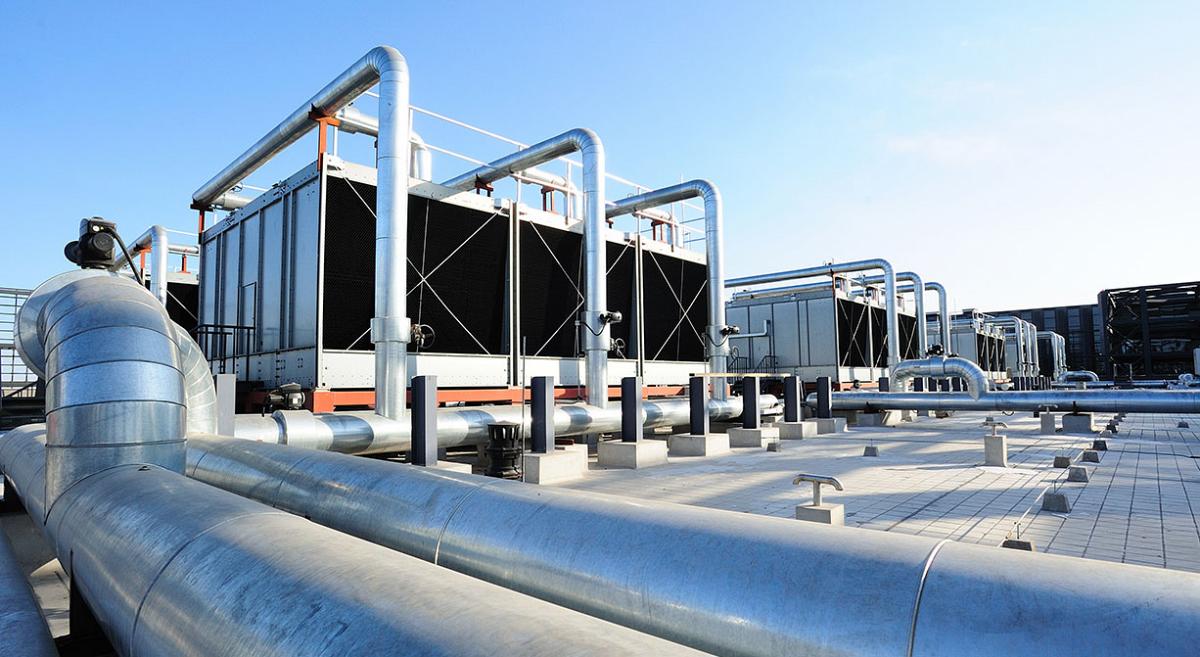
A refrigeration pressure switch monitors refrigerant pressure within a system and opens or closes an electrical circuit when pressure crosses a defined threshold. Its primary job is to protect the compressor; the most expensive component in any refrigeration system; from the damage caused by abnormal high or low pressure conditions.
Simple in concept, critical in practice. Whether you’re designing commercial refrigeration equipment, maintaining a large HVAC/R (Heating, Ventilation, Air Conditioning, and Refrigeration) installation, or specifying components for an OEM product line, understanding how these switches work and where they can fail is essential engineering knowledge.
What Is a Refrigeration Pressure Switch?
A refrigeration pressure switch is an electromechanical or electronic device that detects refrigerant pressure at a specific point in the refrigeration circuit and triggers a switch action at a predetermined set point. When pressure rises above or falls below that set point, the switch either opens or closes a circuit, cutting power to the compressor or signaling a control panel.
Most refrigeration systems use two pressure switches working together:
- High-pressure switch: monitors the discharge side of the compressor
- Low-pressure switch: monitors the suction side
Some OEM designs combine both functions into a single dual pressure switch, reducing installation complexity and connection points. Both types serve the same fundamental purpose: keeping the compressor operating within safe pressure boundaries.
It’s worth clarifying terminology here. A pressure switch delivers a discrete on/off output. A pressure sensor or pressure transducer delivers a continuous analog or digital signal proportional to pressure. These are distinct product categories; not interchangeable terms and selecting the wrong one for your application leads to control problems downstream.
How a Refrigeration Pressure Switch Works: Step by Step
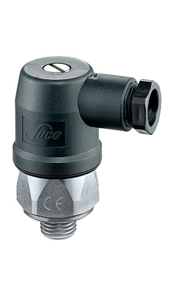 The operating sequence is straightforward, but each step matters for reliable system protection.
Step 1 – Pressure Is Sensed
Refrigerant pressure acts on a sensing element inside the switch body. In mechanical pressure switches, this element is typically a diaphragm or piston. The diaphragm deflects under pressure; the piston translates that pressure into linear mechanical motion. Both designs convert fluid pressure into a measurable physical displacement.
SUCO ESI North America manufactures pressure switches using both diaphragm and piston sensing constructions, selected based on the pressure range, media compatibility, and cycle life requirements of the target application. For refrigeration environments, media compatibility with common refrigerants — R-410A, R-32, R-134a, R-22 — is a non-negotiable design consideration.
Step 2 – The Set Point Is Reached
As pressure increases or decreases, the sensing element deflects until it reaches the mechanical set point — the calibrated threshold at which the switch actuates. In a mechanical design, this is typically determined by a spring preload. The spring force resists displacement until pressure force overcomes it, at which point the switch snaps to its actuated state.
Set points are defined during design or field adjustment. Understanding how to set these correctly is covered in detail in SUCO ESI North America’s mechanical pressure switch adjustment guide.
Step 3 – The Switch Acts
Once the set point is crossed, the switch opens or closes its electrical contacts. In most compressor protection applications, the high-pressure switch is normally closed (NC); it opens on high pressure, cutting the compressor circuit. The low-pressure switch may be NC or NO (normally open) depending on the control logic design.
The result: compressor power is interrupted before damaging pressure conditions can cause mechanical failure, refrigerant loss, or a safety hazard.
High-Pressure vs. Low-Pressure Switches: Different Threats, Same Goal
Both switch types protect the compressor, but they guard against different failure modes.
| Switch Type | Location | Trips On | Primary Threat Prevented |
|---|---|---|---|
| High-pressure switch | Discharge line / compressor outlet | Excessive high pressure | Compressor overload, refrigerant line rupture, condenser failure |
| Low-pressure switch | Suction line / compressor inlet | Excessively low pressure | Refrigerant loss, compressor running without adequate lubrication |
A high-pressure trip typically indicates a blocked condenser, failed condenser fan, or refrigerant overcharge. Left unaddressed, these conditions can rupture lines or cause compressor seizure.
A low-pressure trip often signals refrigerant undercharge, a blocked expansion valve, or an evaporator icing condition. Running a compressor with insufficient suction pressure starves it of refrigerant — which also carries the lubricating oil — leading to bearing failure and compressor burnout.
Where Pressure Switches Sit in the Refrigeration Cycle
Locating these switches correctly within the refrigeration circuit is as important as selecting the right set points.
The basic vapor-compression refrigeration cycle has four stages: compression, condensation, expansion, and evaporation. Pressure switches tap into this cycle at two critical points:
- Discharge side (between compressor outlet and condenser inlet) — high-side pressure; highest pressures in the system
- Suction side (between evaporator outlet and compressor inlet) — low-side pressure; lowest pressures in the system
The compressor itself sits at the boundary between these two sides, which is precisely why it needs protection from both directions. Pressure taps are typically located close to the compressor to minimize sensing lag and ensure the switch responds to compressor-specific conditions rather than downstream pipe anomalies.
In data center cooling and large commercial HVAC/R systems, this placement becomes even more critical given the consequences of compressor downtime. SUCO ESI North America has documented the role of pressure monitoring in these demanding environments — see the discussion of pressure monitoring in data center cooling systems for a deeper look at how pressure control protects uptime in critical facilities.
Mechanical vs. Electronic Pressure Switches in Refrigeration
Refrigeration applications use both technologies, each with distinct advantages depending on the system design.
Mechanical Pressure Switches
Mechanical switches — using diaphragm or piston elements acting on a snap-action electrical contact — have decades of proven performance in refrigeration. They require no external power to operate, offer simple wiring, and provide inherent fail-safe behavior through their normally closed contact configuration.
SUCO ESI North America’s mechanical pressure switch lines are built for durability in harsh cycling environments, with robust construction suited to the vibration and pressure pulsation common in compressor applications. Key design parameters include differential (the gap between cut-out and cut-in pressures), contact rating, and housing ingress protection.
For a deeper comparison of how mechanical and electronic sensing technologies compare across industrial applications, the mechanical vs. electronic pressure switch guide provides a thorough breakdown.
Electronic Pressure Switches
Electronic pressure switches use solid-state sensing elements — often piezo-resistive or ceramic — and integrate signal processing to enable adjustable set points, digital displays, and IO-Link or analog outputs. They offer tighter set point accuracy, field adjustability without tools, and diagnostic capability that mechanical switches cannot provide.
In modern commercial refrigeration and HVAC/R systems with building management system (BMS) integration, electronic pressure switches are increasingly specified for their connectivity and precision. SUCO ESI North America also produces electronic pressure switches. Their datasheets do not list refrigerant compatibility, so please contact our engineering team to confirm suitability for your refrigerant.
To understand the full operating principles behind both approaches, this overview of how pressure switches work covers the fundamentals in detail.
Why Correct Pressure Control Matters
Pressure switch selection and set point calibration directly affect three things: compressor longevity, system efficiency, and operator safety.
Compressor protection: Refrigeration compressors are precision mechanical assemblies operating under continuous load. A single high-pressure event that goes undetected can cause immediate mechanical damage. Properly set pressure switches are the last line of defense when other controls fail.
System efficiency: A low-pressure switch set too conservatively will trip the compressor prematurely, causing short-cycling. Short-cycling — rapid on/off cycling — increases inrush current, stresses contactors, and reduces overall system efficiency. Precise set points keep the system running in its optimal pressure band.
Safety: Refrigerant systems operate under significant pressure. High-side pressures in commercial systems can exceed 400 psi depending on the refrigerant and ambient conditions. Overpressure events without switch protection create real risk of line failure. For systems using A2L mildly flammable refrigerants like R-32 or R-454B, pressure control failures carry additional safety implications.
> View Pressure Switches for HVAC Refrigeration Systems
Frequently Asked Questions
What happens when a refrigeration pressure switch trips?
When a pressure switch trips, it opens (or closes, depending on contact configuration) its electrical circuit, cutting power to the compressor contactor. The compressor stops. Most systems will display a fault or alarm condition. The switch remains in its tripped state until pressure returns to within the acceptable range and — in manual-reset designs — until an operator physically resets the switch.
Can a refrigeration pressure switch be reset automatically?
Some pressure switches are auto-reset: once pressure returns within range, the switch resets and the compressor can restart. Others are manual-reset only, requiring deliberate operator intervention. Manual-reset designs are preferred for high-pressure safety cutouts because they force a human to investigate the cause before restarting — an important safety discipline in commercial refrigeration.
What is the difference between a pressure switch and a pressure transducer in a refrigeration system?
A pressure switch delivers a binary output — on or off — at a defined pressure threshold. A pressure transducer delivers a continuous output signal (typically 4–20 mA or 0–10 V) proportional to actual pressure. Transducers feed real-time pressure data to controllers or BMS systems. Pressure switches provide direct compressor protection. Many modern systems use both: transducers for monitoring and control, switches for safety cutout.
What causes a refrigeration pressure switch to fail?
Common failure modes include contact wear from excessive cycling, diaphragm fatigue or chemical attack from the refrigerant, moisture ingress into the housing, and set point drift over time. Specifying a switch rated for the refrigerant media, ambient temperature range, and expected cycle count of the application prevents premature failure.
What differential setting should I use?
Differential — the pressure gap between cut-out (trip) and cut-in (reset) — should be set wide enough to prevent short-cycling but narrow enough to protect the compressor effectively. Specific values depend on the refrigerant, system design, and compressor specifications. Consult the compressor manufacturer’s data and your refrigerant pressure-temperature charts when setting differential. Contact SUCO ESI North America engineering for application-specific guidance.
Work With Engineers Who Know Pressure Control
SUCO ESI North America has over 80 years of pressure switch design and manufacturing experience, with proven products across HVAC, industrial refrigeration, and commercial cooling applications. Whether you need a standard mechanical pressure switch for a compressor protection circuit or an electronic pressure switch for integration with your control system, the engineering team can help you specify the right solution.
Contact SUCO ESI North America to discuss your refrigeration pressure switch requirements, request technical data, or get a quote for your OEM application. Email: sales@sucoesi.com