Industrial Pressure Switches
SUCO pressure switches are manufactured to high-quality standards and rigorously tested for reliable performance. Our quality management system is successfully recertified according to DIN EN ISO 9001:2015.
Industrial pressure switches provide pressure monitoring and control for hydraulic, pneumatic, HVAC, mobile and OEM applications. Designed to perform in demanding environments, they help protect equipment and maintain safe, efficient system operation under high pressure, temperature fluctuations and heavy vibration.
For engineers and OEMs selecting a pressure switch, SUCO ESI North America provides expert technical support and application assistance throughout the USA, Canada and Latin America. Our team can help identify the right pressure switch based on pressure range, electrical requirements, connection type, operating environment and application needs.
Types of Pressure Switches
High Pressure Switch
Low Pressure Switch
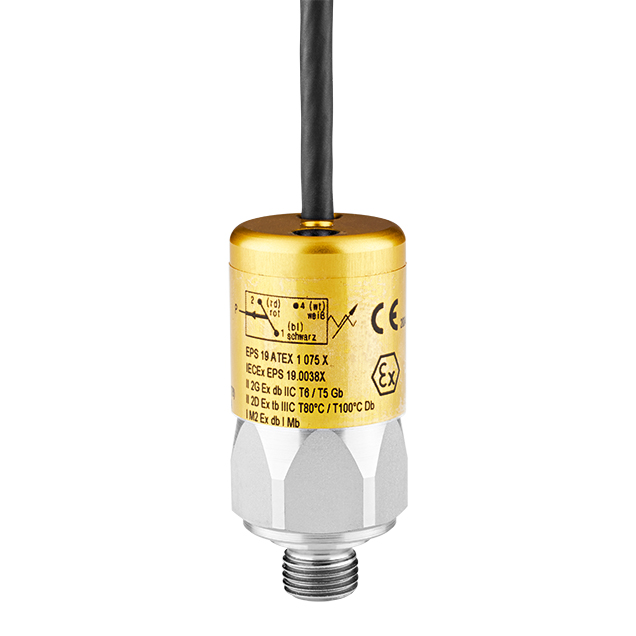
Explosion-Proof Pressure Switch
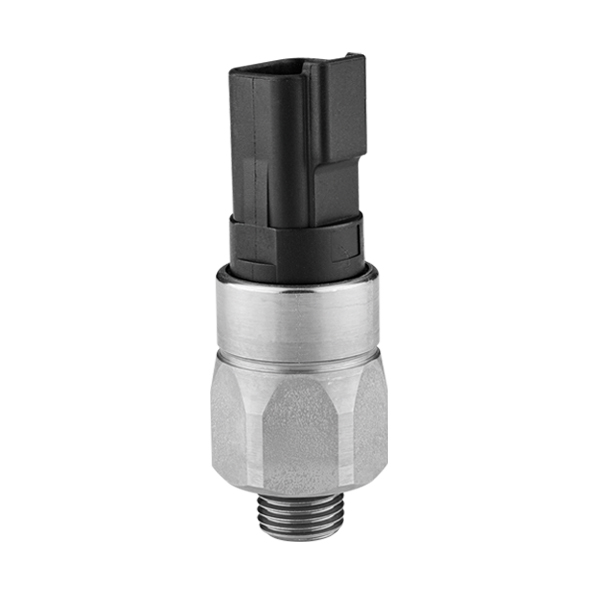
Integrated Deutsch Pressure Switch
Snap-Action Pressure Switch
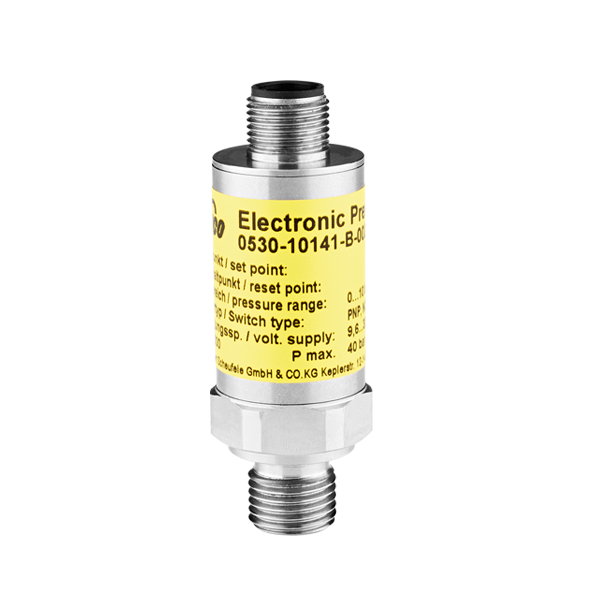
Electronic Pressure Switches
Pressure Switch Types and Selection
| Pressure Switch Type | Typical Pressure Range | Medium (Gas/Liquid) | Accuracy / Sensitivity | Common Applications |
|---|---|---|---|---|
| Diaphragm Pressure Switch | 0–500 psi (0–35 bar) | Gas, Liquid | High sensitivity, ±1–3% F.S. | HVAC, low-pressure pumps, water systems |
| Low-Pressure Switch | 0–50 psi (0–3.5 bar) | Gas, Liquid | Moderate, ±1–3% F.S. | Boilers, water systems, HVAC low-pressure monitoring |
| High-Pressure Switch | 100–3000 psi (7–200 bar) | Gas, Liquid | Moderate, ±2–5% F.S. | Industrial compressors, hydraulic systems, refrigeration |
| Snap-Action (Micro) Switch | 0–600 psi (0–40 bar) | Gas, Liquid | Moderate, fast response | Pumps, compressors, hydraulic systems |
Applications
Industrial & Manufacturing
- Hydraulic systems – Monitor system pressure to prevent pump overload or actuator failure.
- Pneumatic systems – Control air compressors, valves, and air tools.
- Process control – Ensure proper fluid flow and pressure in chemical, food, and beverage production.
HVAC & Refrigeration
- Air conditioning systems – Control compressors based on refrigerant pressure.
- Boilers and chillers – Maintain optimal pressure for efficient operation.
Automotive & Transportation
- Brake systems – Monitor hydraulic brake lines in industrial vehicles.
- Fuel systems – Ensure proper fuel pressure for engines or fuel pumps.
- Heavy machinery – Monitor hydraulic circuits under extreme vibration and load.
Water & Fluid Systems
- Pumps and pipelines – Activate alarms or pump control to prevent overpressure or dry-run conditions.
- Water treatment plants – Maintain constant pressure in filtration and distribution systems.
- Irrigation systems – Ensure proper pressure for even water distribution.
Energy & Power
- Hydropower systems – Protect turbines and valves from pressure spikes.
- Compressed air systems – Prevent overpressure in industrial air storage tanks.
- Oil and gas – Monitor wellheads, pipelines, and hydraulic fracturing operations.
Specialty & Extreme Environments
- Marine applications – Resist saltwater corrosion while monitoring engine or hydraulic pressures.
- High-vibration environments – SUCO switches maintain accuracy even under shocks and heavy vibration.
- High-temperature systems – Designed for industrial ovens, steam lines, or thermal processes.
Frequently Asked Questions for Pressure Switches
1. How does a pressure switch work?
A pressure switch uses a sensing element, such as a diaphragm or piston, to respond to changes in pressure. When the pressure reaches the switch’s preset set point, the sensing element moves and changes the electrical contact from one state to another. Depending on the switch design, it can be normally open (NO), normally closed (NC), or changeover (SPDT). When pressure moves back through the reset point, the switch returns to its original state.
2. How do I choose a pressure switch?
Choose a pressure switch based on the operating pressure, pressure range, set point, media, temperature, electrical requirements, connection type, and environment. You should also check the maximum pressure the switch can withstand, switching configuration (NO, NC, or SPDT), pressure connection, electrical connector, and required IP rating or certification. For hydraulic and mobile applications, vibration, temperature, and resistance to water and dirt should also be considered.
3. When should I use a diaphragm pressure switch instead of a piston pressure switch?
A diaphragm pressure switch is generally used for lower to medium pressure applications and is a good choice when the pressure media requires good compatibility with the diaphragm material. Diaphragm switches are commonly used with air, water, hydraulic fluids, and other compatible media.
A piston pressure switch is typically better suited for higher pressure applications and applications where greater resistance to pressure and mechanical loads is required.
4. What is a Differential Pressure Switch?
A differential pressure switch is a device that monitors the difference in pressure between two points and activates a switch when that pressure difference reaches a preset value.
Differential pressure switches are commonly used for filter monitoring, pumps, compressors, flow detection, process control, hydraulic systems, pneumatic systems, and industrial equipment.
5. How do I select the right SUCO pressure switch for a high-pressure application?
Selecting the right pressure switch starts with the required operating pressure and switching point. The switch should have an appropriate adjustment range and sufficient overpressure capacity for the application.
SUCO offers pressure switches for a wide range of pressures and applications. When selecting a model, we also recommend considering the medium, operating temperature, required hysteresis, electrical connection, and pressure connection. If the application involves pressure spikes or frequent pressure cycling, these conditions should also be considered.
6. What is the difference between high-pressure and low-pressure switches?
A high-pressure switch shuts down a system when pressure rises above its set range, while a low-pressure switch shuts it down when pressure falls below its set range.
Typical HVAC and refrigeration ranges vary by equipment and refrigerant, but commonly:
High-pressure switch: approximately 300–450 psi
Low-pressure switch: approximately 20–80 psi
The exact pressure switch range and cut-in/cut-out settings depend on the system, and manufacturer specifications.
7. Why can the switching point of a pressure switch change with temperature?
Temperature can affect the switching point and switching-point tolerance of a pressure switch. The effect depends on the switch design, materials, and operating conditions.
When selecting a SUCO pressure switch for an application with significant temperature changes, we recommend checking the specified temperature range and switching-point tolerance. The compatibility of the sealing materials with the operating medium should also be considered.
8. What is pressure switch hysteresis?
Pressure switch hysteresis, also called differential, is the difference between the pressure at which the switch changes state and the pressure at which it returns to its original state.
For example, a pressure switch may turn on at 100 psi and turn off at 90 psi. The 10 psi difference is the switch’s hysteresis. Hysteresis helps prevent the switch from rapidly turning on and off when system pressure fluctuates around the set point.
9. What pressure switch is used for hydraulic systems?
For hydraulic systems, the pressure switch should be selected based on the system’s operating pressure, maximum pressure, hydraulic fluid, temperature, electrical requirements, connection type, and environmental conditions. High-pressure mechanical pressure switches are commonly used for hydraulic applications because they provide a simple on/off signal for equipment control and pressure protection. Mobile hydraulic equipment may also require a pressure switch with a sealed connector, high IP protection, and resistance to vibration and temperature changes.
10. What is the difference between a pressure switch and pressure sensor?
A pressure switch changes an electrical circuit when pressure reaches a defined set point. It is mainly used for simple control, alarms, or equipment protection.
A pressure sensor measures pressure and provides a continuous electrical signal, such as 0–10 V or 4–20 mA, to a controller, PLC, display, or monitoring system. A pressure switch is generally used when you need an on/off signal, while a pressure sensor is used when you need to measure and monitor the actual pressure value.
Why Choose SUCO ESI North America Pressure Switches

Precision performance under extreme pressure, temperature, and vibration conditions.- Customizable solutions for OEM applications; tailored to meet your exact system requirements.
- SUCO Pressure switches ensure reliable and consistent operation, minimizing downtime and improving production efficiency.
- ISO 9001:2015 certified quality ensuring consistent performance and manufacturing excellence.
- Proudly serving customers across the USA, Canada, and Latin America.
- 100% function-tested and approved products .
Contact Us
Ready to get precise, high-performance pressure measurement solutions for your industrial applications?
At SUCO ESI North America, our expert support team is here to provide quick, personalized assistance. Whether you need a pressure switch or sensor for your application, we’ll help you find the perfect solution.
Email Us: sales@sucoesi.com | Call: 561-989-8499 (EST)