

Military Pressure Transducers: How They Handle Extreme Temperatures, Meet MIL-Spec Standards, and Support Defense Systems
Military pressure transducers are designed to measure pressure accurately in demanding defense environments. Unlike standard industrial sensors, they must continue performing in extreme temperatures, constant vibration, mechanical shock, moisture, and corrosive conditions. These sensors are used in military aircraft, naval vessels, armored vehicles, and other mission-critical systems where reliable pressure data is essential.
This guide explains how military pressure transducers handle harsh operating conditions, the military standards they may need to meet, and the differences between gauge, absolute, and differential pressure measurements.
How Do Military Pressure Transducers Handle Extreme Temperatures?
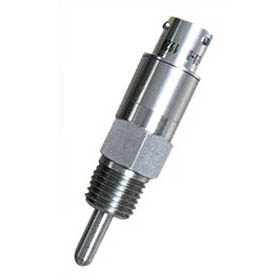 Military pressure transducers are built to provide accurate pressure measurements in both extremely cold and extremely hot environments. They achieve this through temperature compensation, corrosion-resistant materials, and sealed designs that protect the sensing element from environmental damage.
Unlike many commercial pressure transducers, military sensors may experience large temperature changes during normal operation. A hydraulic system on a military vehicle can start below freezing and reach high operating temperatures within a short period. Naval systems also experience temperature changes caused by weather, seawater cooling, and continuous equipment operation.
To remain accurate, the sensor must continue measuring pressure correctly throughout these changing conditions.
Temperature Compensation
Pressure sensing elements naturally react to temperature changes, which can affect measurement accuracy if left uncorrected.
Military pressure transducers use built-in temperature compensation that adjusts the sensor output across its rated operating range. During manufacturing, each sensor is calibrated so pressure readings remain consistent as temperatures change.
This helps reduce measurement errors and minimizes the risk of false alarms or incorrect system readings.
Materials and Environmental Sealing
The materials used inside a military pressure transducer are just as important as the electronics.
Most defense applications use stainless steel wetted parts because they resist corrosion and are compatible with a wide range of hydraulic fluids, fuels, oils, and other process media.
Seals are selected to remain flexible in low temperatures while maintaining their shape during prolonged exposure to high heat. Connectors and cable entries are also sealed to help protect against moisture, condensation, salt spray, and temporary immersion.
For applications where both pressure and temperature need to be monitored, products such as the SUCO ESI North America DF6156-SS (12596270) combine these measurements in a single stainless steel sensor designed for harsh environments.

What Military Standards Apply to Pressure Transducers?
Military pressure transducers are often designed and tested to meet specific military standards that define how equipment should perform in demanding operating environments.
These standards help ensure equipment is reliable, consistent, and suitable for defense applications. Depending on the application, testing may include resistance to vibration, mechanical shock, electromagnetic interference (EMI), humidity, corrosion, and repeated temperature cycling.
Meeting a military specification demonstrates that a sensor has been evaluated under conditions similar to those it may encounter in service.
MIL-T-24742(SH)
One of the primary standards for naval pressure transmitters is MIL-T-24742(SH).
This military specification establishes requirements for pressure transmitters used aboard naval vessels. Testing covers construction, environmental durability, vibration resistance, shock performance, humidity, and electromagnetic compatibility.
Shipboard environments place unique demands on pressure sensors because they operate continuously in areas exposed to vibration, saltwater, changing temperatures, and extended deployments where maintenance opportunities may be limited.
Pressure transmitters such as the SUCO ESI North America DF6103, NSN 6685-01-522-5335 are designed for applications requiring compliance with this naval specification.
What is an NSN?
NSN stands for National Stock Number (also known as a NATO Stock Number).
An NSN is a standardized 13-digit identification number used throughout military supply systems to identify approved equipment. It allows procurement teams to source, track, and manage components consistently across defense organizations.
Not every pressure transducer has an NSN. Assignment requires documentation and qualification through the appropriate defense supply process.
Common Qualification Tests
Military pressure transducers may undergo testing such as:
- Vibration testing to simulate vehicle, aircraft, or shipboard operation
- Mechanical shock testing for sudden impacts and high-force events
- EMI and EMC testing to verify electromagnetic compatibility
- Salt fog and humidity testing for corrosion resistance
- Thermal cycling to confirm long-term performance across temperature extremes
These tests help verify that the sensor can continue operating reliably under demanding environmental conditions.
Gauge, Absolute, and Differential Pressure: What’s the Difference?
Pressure transducers measure pressure using different reference points. Selecting the correct measurement type is important because using the wrong sensor can produce incorrect readings, even if the sensor itself is highly accurate.
| Measurement Type | Reference Point | Common Defense Applications |
|---|---|---|
| Gauge Pressure (PSIG) | Atmospheric pressure | Hydraulic systems, fluid power, vehicle systems |
| Absolute Pressure (PSIA) | Perfect vacuum | Aircraft systems, fuel monitoring, altitude measurement |
| Differential Pressure (PSID) | Second pressure source | Filter monitoring, flow measurement, level monitoring |
Gauge Pressure
Gauge pressure measures pressure relative to the surrounding atmosphere.
This is the most common measurement method for hydraulic systems, pumps, and many military vehicle applications where the operating pressure above atmospheric pressure is the value that matters.
Absolute Pressure
Absolute pressure is measured relative to a perfect vacuum.
Because atmospheric pressure changes with altitude, absolute pressure measurement is used in aerospace systems, fuel systems, cabin pressurization, and other applications where altitude affects system performance.
Differential Pressure
Differential pressure measures the difference between two pressure points.
This method is commonly used to monitor filters, heat exchangers, and flow systems. As a filter becomes clogged, the pressure difference across it increases, providing a simple way to monitor filter condition and schedule maintenance before flow is restricted.
> View Defense Pressure Transmitters, Transducers and Tachometers
Frequently Asked Questions
What does a pressure transducer do?
A pressure transducer converts a mechanical pressure input — from a fluid, gas, or vapor — into an electrical output signal proportional to that pressure. The signal (commonly 4–20 mA, 0–5 V, or 0–10 V) canF be read by a control system, data logger, or display. This makes pressure monitoring continuous, precise, and remotely accessible without manual gauges.
What is the difference between a military and a commercial pressure transducer?
Military pressure transducers are designed and tested for harsh operating conditions that commercial sensors may not be able to withstand. Depending on the application, they may be qualified to military standards for vibration, shock, electromagnetic compatibility (EMI/EMC), humidity, corrosion resistance, and temperature cycling.
What are the types of pressure transducers?
Pressure transducers are categorized primarily by their measurement reference: gauge (referenced to atmosphere), absolute (referenced to vacuum), and differential (measured between two pressure points). They are also categorized by sensing technology — piezoresistive, capacitive, piezoelectric, and strain gauge are the most common. Each technology has trade-offs in temperature performance, long-term stability, and cost.
What military standards apply to pressure transducers?
The required standard depends on the application. For naval pressure transmitters, MIL-T-24742(SH) is a commonly referenced specification. Other defense programs may require additional environmental, electrical, or qualification testing depending on the platform and procurement requirements.
What temperature range can military pressure transducers withstand?
The operating temperature depends on the specific model, but military pressure transducers are designed to maintain accurate pressure measurements across much wider temperature ranges than standard industrial sensors. Many are built for environments that include extreme cold, high heat, and rapid temperature changes.
When should I use absolute vs. gauge pressure in a defense application?
Use absolute pressure when the measurement must be independent of local atmospheric conditions — altitude sensing, avionics, and sealed system monitoring. Use gauge pressure when you need to know system pressure relative to the surrounding environment, which is the case for most hydraulic and pneumatic systems at ground level or fixed altitudes.
What are military pressure transducers used for?
Military pressure transducers are commonly used in:
- Hydraulic systems
- Fuel systems
- Brake systems
- Cooling systems
- Pneumatic systems
- Aircraft instrumentation
- Naval fluid systems
- Ground combat vehicles
- Defense testing equipment
________________________________________________________________
Contact SUCO for Military Pressure Transducer Support
Whether you’re designing, maintaining, or upgrading a defense system, SUCO ESI North America provides expert technical support for military pressure transducers used in U.S. defense applications. Our team can help you select the right sensor for ground vehicles, naval vessels, aerospace, and other demanding environments.
Contact SUCO ESI North America to request military-grade datasheets, discuss your application with our engineering team, or receive a quote tailored to your defense program’s pressure measurement requirements.
Email: sales@sucoesi.com