
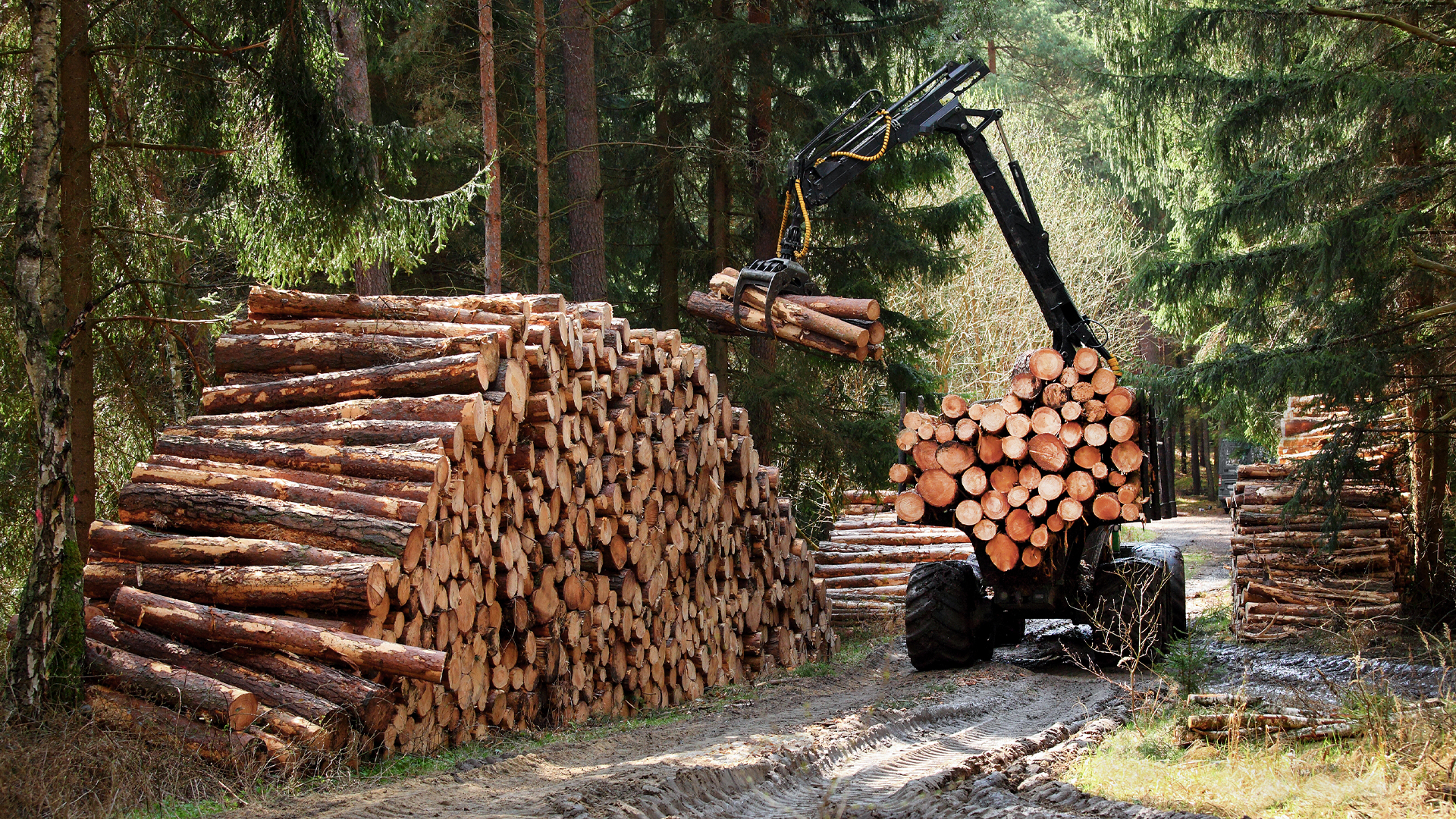
Forestry equipment operates in some of the harshest hydraulic environments, where vibration, moisture, dirt, and heavy loads can quickly damage sensitive components. Pressure switches help protect hydraulic systems by monitoring oil pressure, brake pressure, steering systems, and filtration circuits, reducing downtime and preventing costly failures.
A pressure switch typically provides an electrical on/off signal when a preset pressure threshold is reached, while a pressure sensor provides continuous pressure data for machine controls, displays, and diagnostics.
What does a Pressure Switch do on forestry equipment?
A pressure switch on forestry equipment monitors hydraulic or pneumatic pressure and activates an electrical signal when a preset pressure level is reached. It helps protect critical systems such as brakes, steering, transmissions, hydraulic circuits, and lubrication systems from pressure-related failures.
Where Pressure Switches are used on Forestry Equipment
Forestry hydraulics are complex. A single harvester can run eight or more independent hydraulic circuits simultaneously; feed rollers, cutting head rotation, boom extension, grapple open/close, track drive, and cab leveling. Each circuit benefits from dedicated pressure monitoring.
Here’s a quick reference of the machines, systems, and what pressure monitoring protects:
| Machine / System | Monitored Circuit | What the Switch Protects |
|---|---|---|
| Feller buncher | Accumulator / cutting head | Prevents head stall, detects low accumulator charge |
| Skidder | Winch drive, brake circuit | Brake interlock, winch motor overload protection |
| Harvester | Boom extension, feed roller | Boom drift prevention, feed force limiting |
| Forwarder | Loader boom, drive axle | Load sensing, traction control enable/disable |
| Log loader | Grapple open/close, slew | Overload signaling, anti-crush interlocks |
| Swing yarder / winch | Cable tension circuit | Overload shutoff, drum brake engagement |
Hydraulic System Protection: Booms, Grapples, and Winches
Boom and grapple circuits are where pressure monitoring earns the most critical role on forestry machines. A forwarder crane extending over uneven terrain creates dynamic pressure spikes that can exceed steady-state working pressure by 30–50%. Without a pressure switch monitoring the relief circuit, repeated spikes erode valve seats and pump seals long before a scheduled service interval.
On winch-equipped machines—skidders and yarders in particular—hydraulic brake circuits must disengage only when drive pressure is confirmed. A pressure switch wired into the brake release circuit prevents the brake from lifting unless hydraulic pressure is present and within range. This is not a convenience feature. It’s a machine control safety function.
For grapple control, pressure switches provide closed-loop confirmation that the grapple has achieved full clamp force before the boom begins a lift cycle. Electronic pressure switches with analog outputs can feed this signal directly into the machine’s CAN (Controller Area Network) bus, enabling the cab display to show live hydraulic status.
For a deeper look at how these devices function within mobile hydraulic circuits, see SUCO ESI North America’s overview of mobile hydraulics pressure control systems.
 Why Forestry Is Harder on Sensors Than Most Environments
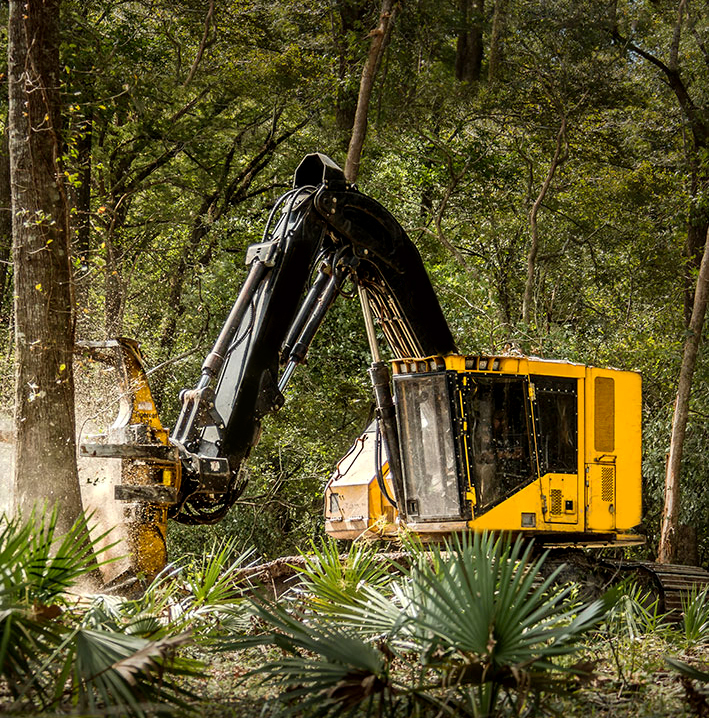
It’s worth being direct: forestry is among the most punishing environments for any electromechanical component. Consider what a pressure switch mounted on a harvester boom faces in a single shift:
- Mechanical shock and vibration: Felling, bunching, and delimbing generate impacts that propagate directly through the machine frame and hydraulic lines. Sensor housings must withstand repeated shock loads without drift or failure.
- Temperature extremes: Logging operations run year-round in northern climates. Cold starts at -40°F (-40°C) are common in Canadian and Scandinavian operations, while summer work in humid southern forests can push ambient temperatures toward the upper operating limit. Pressure switches specified for forestry duty must cover this full range.
- Debris and contamination: Bark, wood chips, hydraulic fluid mist, and mud are constant. IP67 minimum protection (dust-tight, temporary immersion) is the baseline; IP69K (high-pressure washdown) is strongly preferred for components on booms and undercarriage-mounted locations.
- High-pressure hydraulic circuits: Mobile forestry hydraulics commonly operate between 250 and 400 bar, with some circuits reaching higher. Sensors must be specified with adequate overpressure safety factors—typically 1.5× to 2× working pressure—to survive spike events without permanent damage.
These combined stressors rule out components designed for stationary industrial use. Forestry hydraulic sensors demand robust stainless steel housings, premium elastomer seals compatible with hydraulic fluid and biodegradable ester-based fluids increasingly mandated in forestry work, and sensing elements engineered for shock resistance.
Mechanical vs. Electronic Pressure Switches for Forestry Duty
Both mechanical and electronic pressure switches are used in forestry equipment, and the choice depends on circuit complexity and machine architecture.
Mechanical pressure switches use a spring-loaded piston mechanism to actuate a snap-action switch at a set pressure. They’re simple, self-contained, and robust under shock loading. Piston sensing elements—rather than diaphragm or Bourdon tube designs—are the preferred choice for high-pressure mobile hydraulic circuits because the piston geometry inherently handles pressure spikes without fatigue failure. They output a simple on/off (discrete) signal and don’t require external power to operate.
Electronic pressure switches combine a pressure sensor element with integrated switching logic. They offer adjustable setpoints, multiple switch outputs, and optional analog signal output—all in a compact package. On modern forestry machines with CAN bus controllers, electronic units can communicate pressure status and diagnostics directly to the cab display or telematics system.
For circuits where the only requirement is “pump on / pump off” or “brake engage / disengage,” mechanical switches remain the cost-effective and reliable choice. For boom load management, operator displays, or integrated machine control systems, electronic switches or pressure sensors with switching outputs are the better fit.
Not sure which type suits your application? SUCO ESI North America’s comparison of mechanical vs. electronic pressure switches walks through the key selection criteria in detail.
Selecting Connectors and Mounting for Mobile Forestry Machines
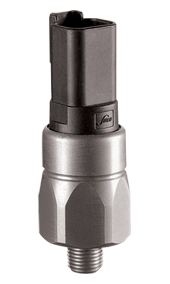 Connector and mounting selection is where many OEM designs develop problems in the field. Forestry machines move constantly, and every connector is a potential ingress point for moisture and debris.
Connector Standards
The Deutsch DT/DTM series connector has become the de facto standard for off-highway mobile equipment in North America and much of Europe. Its sealed, twist-lock design provides IP67 protection at the mating interface, resists vibration-induced back-out, and is rated for 12V and 24V DC systems—the two voltage standards that cover virtually all forestry OEM applications. Avoid bare-wire compression terminations in forestry applications; they corrode and fail under vibration.
Mounting Considerations
- Direct port mounting (G1/4, G1/2, SAE straight thread): Minimizes the use of hydraulic hose between the circuit and the sensor, reducing leak points. Preferred where packaging allows.
- Remote mounting with a snubber or isolator: Used when the sensor must be located away from the hydraulic port, or when pressure spikes need dampening before reaching the sensing element.
- Orientation: Install with the electrical connector facing down or to the side where possible to prevent water pooling at the cable entry point, even on IP69K-rated units.
For hydraulic pressure switches and sensors validated for agricultural and forestry mobile equipment, SUCO ESI North America’s hydraulic pressure switches for agriculture and forestry product line is a logical starting point. Their off-highway transportation category also covers a range of configurations suited to forestry OEM integration.
It’s also worth understanding the distinction between pressure switches and pressure sensors before finalizing a bill of materials—both terms appear in forestry machine documentation, and they perform different functions. SUCO ESI North America’s guide on pressure sensors vs. pressure switches vs. pressure transducers clarifies the differences clearly.
Specifications for Forestry Applications
- Measuring range: Up to 600 bar for mobile hydraulic circuits
- Temperature range: -40°F to 257°F (-40°C to 125°C)
- Protection class: IP67 minimum; IP69K for exposed mounting locations
- Sensing element: Piston-type preferred for high-shock, high-pressure circuits
- Housing material: Stainless steel with premium elastomer seals
- Voltage: 12V / 24V DC for mobile equipment compatibility
- Connector: Deutsch DT/DTM series or equivalent sealed connector
- Fluid compatibility: Mineral hydraulic oil and biodegradable ester-based fluids
Frequently Asked Questions
What are the two main types of pressure switches?
The two primary types are mechanical pressure switches and electronic pressure switches. Mechanical switches use a physical actuating element—most commonly a piston or diaphragm—to trigger a snap-action contact at a set pressure. Electronic switches integrate a sensing element with programmable switching logic, enabling adjustable setpoints and analog outputs alongside discrete switching signals.
What is the purpose of a pressure switch in forestry equipment?
A forestry equipment pressure switch monitors hydraulic pressure and sends an electrical signal when pressure reaches a programmed limit. This allows machine controllers to protect hydraulic pumps, alert operators, and prevent failures caused by overpressure or pressure loss.
What are common problems with pressure switches on logging equipment?
The most common failure modes in forestry service are: connector corrosion from moisture and debris ingress (resolved by IP69K-rated units with Deutsch connectors); setpoint drift caused by repeated pressure spike fatigue on diaphragm-type elements (resolved by piston-type sensing); and seal degradation from biodegradable hydraulic fluid incompatibility. Specifying the right seal material and protection class for the installation location prevents the majority of field failures.
What are the main types of pressure sensors?
Pressure sensors are broadly categorized by their sensing technology: piezoresistive (strain gauge on a diaphragm), capacitive, piezoelectric, resonant frequency, optical fiber, Silicon-on-Sapphire, and ceramic. For mobile hydraulics in forestry, piezoresistive and Silicon-on-Sapphire designs are most common, with Silicon-on-Sapphire offering superior long-term stability and shock resistance for demanding off-highway duty cycles.
What pressure range is common on forestry machines?
The hydraulic pressure used in forestry machines depends on the application, but most modern equipment operates within 180–350 bar (2,600–5,100 psi). High-performance harvesters, forwarders, skidders, and feller bunchers often use pressures between 250 and 350 bar to provide the force needed for lifting, cutting, gripping, and propulsion. Some specialized hydraulic circuits may operate at even higher peak pressures during demanding tasks.
Pressure switches used on forestry equipment are typically selected to match the operating pressure of a specific hydraulic circuit rather than the machine’s maximum system pressure. Common monitored circuits include brake systems, steering hydraulics, attachment controls, transmission lubrication, and hydraulic filtration. Choosing a pressure switch with the correct switching range and a suitable overpressure rating helps ensure reliable operation in harsh forestry environments where vibration, shock loads, moisture, and contamination are common.
Talk to SUCO ESI North America Engineering
Forestry hydraulic systems don’t leave room for generic component selection. The shock loads, temperature range, fluid types, and connector requirements narrow the field quickly—and getting the specification wrong means unplanned downtime in locations where service trucks can’t always reach.
SUCO ESI North America brings 80+ years of pressure-control engineering to mobile hydraulic applications, including forestry OEM programs. Whether you’re designing a new harvester platform, respecifying components on an existing machine, or troubleshooting field failures, the engineering team can review your circuit parameters and recommend the right pressure switch or sensor configuration.
Request a quote or contact SUCO ESI North America technical team at sales@sucoesi.com to discuss your forestry hydraulic pressure monitoring requirements.