

Data centers consume a significant share of global electricity, and cooling is a major part of that demand. As facilities transition from air cooling to liquid-based architectures; including coolant distribution units (CDUs), cold plate systems, and immersion cooling; pressure monitoring has become a critical control layer rather than a secondary measurement tool.
These systems operate within narrow hydraulic limits. Even small pressure deviations can lead to pump damage, reduced cooling efficiency, leaks, or thermal failure of IT equipment. In modern high-density environments, pressure monitoring is essential for both equipment protection and thermal stability.
Why Pressure Monitoring Is Critical in Liquid Cooling
Liquid cooling removes heat far more effectively than air, but introduces hydraulic risks that must be tightly controlled.
1. Equipment Protection
Pressure monitoring prevents damage to pumps, seals, manifolds, and quick-disconnect fittings.
- High-pressure events can rupture cold plates or fittings
- Low-pressure conditions can cause pump cavitation or dry run failure
- Sudden transients can damage seals and bearings within minutes
2. Flow Assurance
Pressure differentials provide early indicators of system issues:
- Rising differential pressure → fouling or blockages in heat exchangers
- Unbalanced manifold pressure → uneven server cooling
- Air entrainment → degraded thermal performance
3. Energy Optimization
Pressure-based control enables dynamic pump operation:
- Variable-speed pumps adjust to real-time thermal load
- Lower pump energy use than fixed-speed systems
- Reduced parasitic power consumption at scale
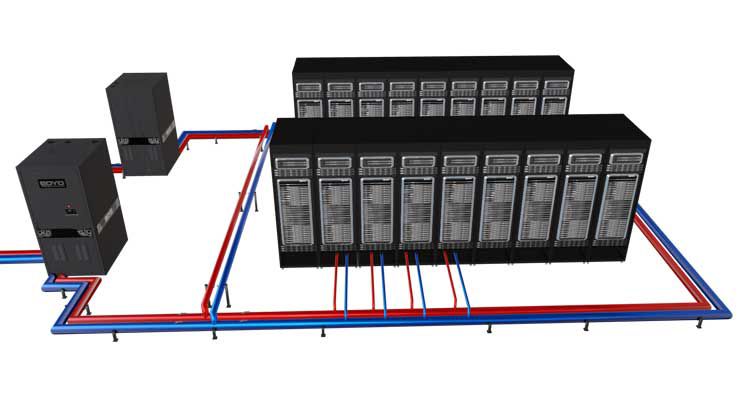
Critical Pressure Monitoring Points in CDU Systems
Coolant Distribution Units (CDUs) act as the hydraulic core of liquid cooling infrastructure. Key monitoring points include:
Pump Discharge
Protects against overpressure and deadhead conditions.
- High-speed pressure switches prevent pump damage
- Mechanical switches are often preferred for fail-safe response
- Especially important during valve closures or startup transients
Supply Header Pressure
Establishes baseline system operating pressure.
- 4–20 mA pressure transducers provide long-distance signal stability
- Used for integration with Building Management Systems (BMS)
- Enables real-time system balancing
Heat Exchanger Differential Pressure
A key indicator of system health.
- Early detection supports predictive maintenance
- Typical alarm thresholds: 20–30% above baseline
- Differential pressure switches in industrial systems must maintain accuracy across turndown ratios of 10:1 or greater as cooling demands fluctuate with server loads.
Return Line Pressure
Detects leaks and cavitation.
- Low pressure may indicate coolant loss or vapor formation
- Helps prevent downstream IT hardware damage
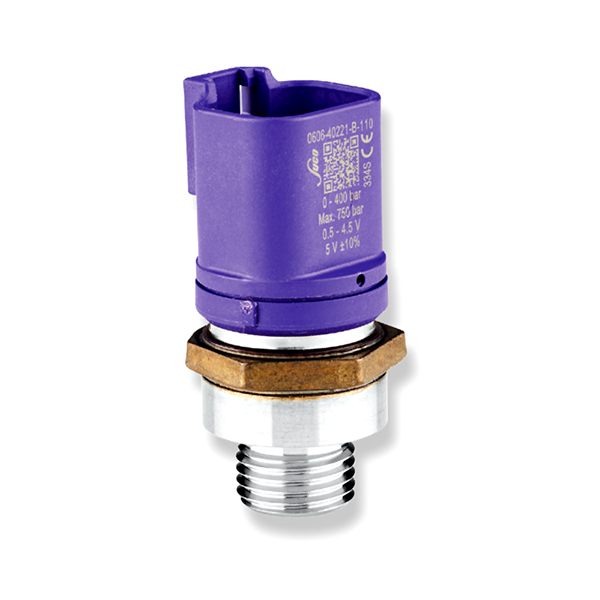 Selecting Pressure Monitoring Devices for Data Center Applications
Media Compatibility
Cooling fluids may include water-glycol or dielectric liquids.
- Stainless steel wetted parts recommended
- Chemical compatibility must be verified per fluid type
- Seal selection (e.g., fluorocarbon) is critical for long-term reliability
Accuracy and Stability
Data centers operate under varying ambient conditions.
- Temperature range: typically 15–35°C in mechanical spaces
- Silicon-on-sapphire sensors offer high thermal stability
- Accuracy around ±0.5% across wide temperature ranges
Response Time
Fast reaction is critical for protection systems.
- Mechanical switches: 50–100 ms response typical
- Essential for transient events like water hammer or valve switching
Electrical Integration
- 4–20 mA signals for long-distance analog monitoring
- SPDT/DPDT contacts for alarm and safety circuits
- Fail-safe configuration ensures safe system shutdown on power loss
Installation Constraints
- Compact fittings required in dense CDU piping
- Standard port sizes: 1/8” to 1/2” NPT
- Proper placement avoids turbulence and inaccurate readings
> View SUCO Pressure Sensors for Data Center Cooling Systems
Design Mistakes and How to Avoid Them
Inadequate Pressure Switch Deadband: Switches cycling excessively near their setpoints cause nuisance trips and relay contact wear. Select switches with appropriate deadband—typically 10-15% of setpoint—to prevent oscillation. Adjustable deadband models allow field tuning after commissioning reveals actual system behavior.
Improper Sensor Mounting: Installing pressure taps in turbulent flow zones or directly opposite elbows creates erroneous readings. Position sensors in straight pipe runs at least 5 pipe diameters downstream of flow disturbances. Use isolation valves to enable sensor replacement without system drainage, but ensure valves remain fully open during operation—partially closed valves restrict flow and distort pressure readings.
Ignoring Glycol Concentration Effects: Water-glycol mixtures exhibit higher viscosity and different thermal expansion characteristics than pure water. Pressure drops increase with glycol concentration—a system designed for 30% glycol will show higher differential pressures at 50% concentration. Commission pressure monitoring after finalizing coolant mixture ratios to establish accurate baselines.
Overlooking Calibration Schedules: Pressure monitoring accuracy degrades over time from diaphragm fatigue and zero-point drift. Establish annual calibration schedules for critical pressure transducers, particularly those used for flow calculations or control system inputs. Differential pressure switches warrant semi-annual verification since they rely on two measurement elements where errors compound.
Pressure Management in Cold Plate Cooling Systems
Direct-to-chip cold plate systems mount heat exchangers directly against processors, requiring precision pressure control within narrow operating windows. These systems present unique monitoring challenges:
Manifold Balance: Server racks containing 40-80 individual cold plates demand uniform pressure distribution. Unbalanced manifolds create preferential flow paths where some processors receive excess cooling while others overheat. Pressure taps at manifold endpoints, combined with differential monitoring, reveal imbalances before thermal issues manifest. Engineers typically target differential pressures under 2 PSI across manifold lengths to ensure adequate distribution.
Quick-Disconnect Protection: Blind-mate connectors that enable hot-swappable server modules operate at 30-60 PSI. Pressure interlocks prevent disconnection under pressure, which would spray coolant onto energized electronics. Mechanical pressure switches can signal an interlock that prevents disconnect actuation until pressure bleeds below safe thresholds—typically 5 PSI or lower.
Individual Loop Monitoring: High-density configurations sometimes monitor each cold plate loop individually using compact pressure sensors with M5 or 1/8″ NPT ports. This granular approach identifies single-point failures like clogged microchannels or gasket degradation before they compromise adjacent systems. The trade-off involves higher instrumentation costs against reduced troubleshooting time and improved failure isolation.
Thermal Expansion Management: Cold plate systems experience significant pressure swings during thermal cycling as coolant density changes. Expansion tanks absorb volume variations, but pressure monitoring ensures tank capacity isn’t exceeded during high-load conditions. Upper-limit switches prevent relief valve activation, which would introduce air into closed loops.
Future Developments in Pressure Monitoring Technology
Pressure monitoring in data center cooling is evolving quickly as liquid cooling becomes more common in high-density computing environments. Several key technologies are shaping the next generation of systems.
Wireless Pressure Sensors
Wireless pressure sensors are becoming more practical for non-critical monitoring points.
Battery-powered devices using low-energy wireless protocols reduce wiring and installation costs. Typical battery life is 5–7 years when reporting at moderate intervals (around 10–15 minutes), making them suitable for trend monitoring and efficiency tracking.
However, they are not ideal for real-time protection. In most modern designs, a hybrid approach is used:
- Hardwired sensors for safety and shutdown functions
- Wireless sensors for optimization and analytics
Combined Flow and Pressure Measurement
New integrated instruments can measure both flow and pressure in a single device.
These systems estimate flow using differential pressure across a known restriction, reducing:
- Piping complexity
- Installation points
- System cost
While efficient, they are generally best for secondary monitoring and diagnostics, not high-accuracy control or custody-grade measurement. Dedicated flowmeters still provide better precision for critical applications.
Predictive Sensor Diagnostics
Smart pressure transmitters now include built-in health monitoring.
These devices can detect early signs of sensor drift or failure by analyzing:
- Diaphragm stress changes
- Temperature compensation behavior
- Signal stability and noise patterns
This supports condition-based maintenance, reducing reliance on fixed calibration schedules and lowering long-term maintenance costs.
Ensuring Reliable Pressure Monitoring in Critical Infrastructure
Data center cooling systems are mission-critical environments where pressure monitoring directly impacts uptime, efficiency, and equipment safety. As facilities shift from air cooling to liquid cooling architectures, pressure monitoring has moved from a basic measurement function to a core part of operational intelligence and thermal management strategy.
With decades of experience in industrial pressure measurement, SUCO ESI North America offers pressure switches for modern data center liquid cooling systems, such as the 0140 pressure switch, for applications including:
- CDU (Coolant Distribution Units)
- Cold plate / direct-to-chip cooling
We provide technical consultation that goes beyond catalog specifications to address your specific requirements, from initial design through long-term support. Contact us at sales@sucoesi.com
Written by Skyler Libkie, SUCO ESI North America writer