
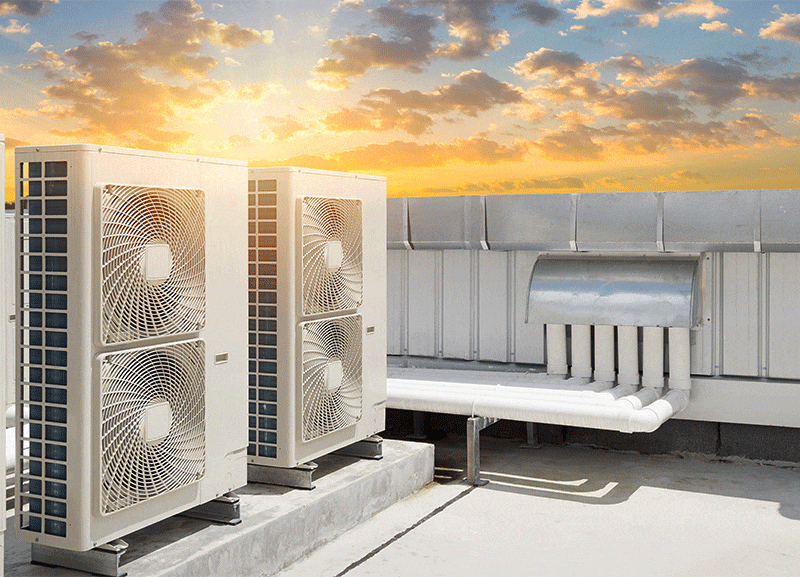
Properly selected pressure switches are critical to protecting commercial and industrial refrigeration systems. Failures in cold storage, industrial chillers, Data Center Cooling Equipment or HVAC systems can cost thousands in lost product, repairs, and downtime. Pressure switches and sensors serve as the first line of defense, maintaining safe operating pressures, preventing compressor damage, and ensuring efficient system performance.
How Pressure Switches Protect Refrigeration Systems
Refrigeration systems rely on precise pressure ranges to maintain phase changes in the refrigerant. High or low pressure outside safe limits can cause immediate equipment damage. Pressure switches monitor these conditions and interrupt compressor operation when necessary, protecting expensive components and minimizing downtime.

Typical refrigeration circuits include:
High-pressure side – carries hot refrigerant gas from compressor to condenser.
Low-pressure side – returns cooled refrigerant vapor to the compressor.
Many installations employ multiple switches to monitor different points. Even a simple walk-in freezer may use one high-pressure cutout switch, while a large chiller system can use five or more switches configured for specific protection tasks.
Key Pressure Switch Types in Cooling & Refrigeration
 1. High-Pressure Switches
- Protect compressors from excessive discharge pressure caused by condenser blockages, overcharge, or ambient extremes.
- Mount on discharge lines or receiver tanks; dual setpoint options provide warnings before full shutdown.
- View High Pressure Adjustable Hysteresis – series 0171
2. Low-Pressure Switches
- Prevent damage from low suction pressure or evaporator freezing.
- Ensure compressors receive sufficient refrigerant vapor for motor cooling.
- Electronic switches allow precise deadband control in low-temperature applications.
- View Low Pressure Switches
3. Differential Pressure Switches
- Monitor pressure differences across evaporators, oil circuits, or water-cooled condensers.
- Detect blockages, inadequate flow, or coil frosting before system performance suffers.
Selecting the Right Pressure Switch: Seven Critical Factors
1. Refrigerant Compatibility – Ensure wetted materials are rated for your refrigerant type (R-410A, ammonia, etc.).
2. Pressure Range & Adjustment – Choose ranges covering normal operation and cutout points. Adjustable switches allow fine-tuning during commissioning.
3. Electrical Ratings – Match switch contacts to compressor load type (inductive or pilot duty) and voltage.
4. Connection Type – Flare, SAE, or NPT fittings must be properly sealed for vibration resistance and leak prevention.
5. Environmental Protection – Select NEMA/IP-rated enclosures based on location, humidity, and temperature extremes.
6. Response Time & Deadband – Ensure fast response without nuisance trips; consider adjustable time delays.
7. Reset Type – Manual reset prevents restart after high-pressure faults; automatic reset suits low-pressure applications.
Installation Best Practices
- Mount high-pressure switches on horizontal discharge lines; low-pressure switches near compressor suction.
- Isolate switches from vibration using rigid brackets or flexible lines.
- Ensure leak-free connections using proper torque; verify with leak detection.
- Separate electrical wiring from refrigerant lines; use strain reliefs and clear labeling.
- Maintain accessibility for maintenance and future adjustments.
Pressure Switch vs. Pressure Sensor
- Switches: Cost-effective, reliable on/off protection. Work independently of control systems.
- Sensors: Provide continuous analog output for monitoring and optimization via building management systems.
- Hybrid Approach: Mechanical switches for safety cutouts, sensors for monitoring and predictive maintenance.
FAQ
1. What is the difference between a pressure switch and a pressure sensor in refrigeration systems?
A pressure switch is a mechanical or electronic device that turns equipment on or off when a specific pressure threshold is reached. A pressure sensor continuously measures pressure and sends a signal to a controller, PLC, or building management system. In refrigeration and HVAC systems, pressure switches are commonly used for safety protection, while pressure sensors provide real-time monitoring and control for improved system efficiency.
2. How do I choose the right pressure switch for a refrigeration or cooling system?
When selecting a pressure switch, consider the refrigerant type, operating pressure range, switching setpoint, electrical rating, connection size, and environmental conditions. High-pressure switches protect compressors from excessive pressure, while low-pressure switches help prevent damage caused by refrigerant loss or inadequate suction pressure. Choosing a switch compatible with your refrigeration system ensures reliable performance and safety.
3. Why is a high-pressure switch important in commercial refrigeration systems?
A high-pressure switch protects compressors and refrigeration equipment from excessive discharge pressure. If system pressure exceeds a safe limit due to dirty condensers, blocked airflow, overcharging, or mechanical faults, the switch automatically shuts down the system to prevent costly equipment damage and improve operational safety.
4. Can pressure sensors be used with modern HVAC and IoT monitoring systems?
Yes. Modern pressure sensors often provide analog outputs such as 4–20 mA, 0–10 V, or digital communication protocols that integrate with HVAC controllers, building automation systems (BAS), and IoT monitoring platforms. These sensors enable real-time performance tracking, remote diagnostics, energy optimization, and predictive maintenance for refrigeration and cooling equipment.
Protect Your Investment with Proper Pressure Monitoring
Pressure switches are a small investment that prevent costly system failures. Consider:
- Compatibility with refrigerants and environmental conditions.
- Total cost of ownership: installation, service life, and replacement ease.
- Redundant monitoring in critical applications (mechanical switch + electronic sensor).
At SUCO Engineering, we’ve spent over 80 years developing pressure switch technology for industrial and commercial cooling applications. Our German-engineered switches and sensors deliver reliability, supported by technical guidance for engineers and project planners in the US and Canada. Selecting the right switches ensures your refrigeration system operates safely and efficiently.
Contact SUCO’s technical team today to discuss your refrigeration pressure monitoring requirements and protect your systems with precision-engineered switches.
Written by Skyler Libkie, SUCO ESI North America writer