Description
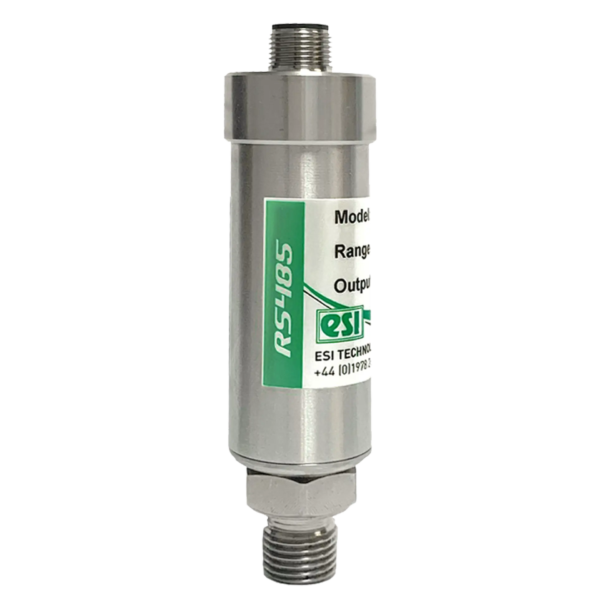
The PR3930 subsea pressure transducer is engineered for high-accuracy pressure measurement in deep-sea and harsh subsea environments, including offshore oil & gas, ROV systems, and oceanographic research.
Designed for long-term subsea deployment, this digital and analog subsea pressure sensor delivers exceptional stability, corrosion resistance, and reliable communication via RS-485 over long distances.
Features & Performance
- Depth rating: Up to 6,000 meters (deep ocean applications)
- Pressure ranges: Up to 1,500 bar (21,755 psi)
- Output signals:
RS-485 (half-duplex digital communication)
0–5 V analog output - Communication distance: Up to 1,200 meters (RS-485)
- Selectable baud rate for flexible system integration
- High accuracy
- Excellent EMI/noise resistance for subsea electronics
- Hyperbaric tested (certification available up to 3,000 m)
- Environmental Stress Screening (ESS tested)
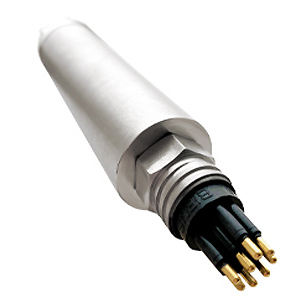
- Connector: Subconn MCBH8M (8-pin), optional 6-pin version
Advanced Sensor Technology
The PR3930 utilizes Silicon-on-Sapphire (SoS) sensor technology, a preferred solution for high-pressure subsea instrumentation:
- Piezoresistive silicon strain gauge grown on sapphire diaphragm
- Molecularly bonded to a titanium alloy sub-diaphragm
- Virtually zero hysteresis
- Superior long-term drift performance
- Excellent corrosion resistance in seawater environments
- Wide operating temperature range without signal degradation
This makes it ideal for deep sea pressure sensing where conventional sensors fail.
RS-485 Subsea Communication Advantages
The integrated RS-485 interface enables:
- Multi-drop networking (multiple sensors on one line)
- Unique device addressing for each transducer
- Reduced cabling complexity in subsea systems
- Reliable long-distance data transmission (up to 1200 m)
- Improved signal integrity in electrically noisy environments
Applications
Offshore oil & gas production systems
Location: On subsea manifolds and flowlines
Prevents: Overpressure, equipment damage, and unplanned shutdowns
Subsea wellhead and pipeline pressure monitoring
Location: At wellheads and along pipelines
Prevents: Leaks, blockages, and pressure loss events
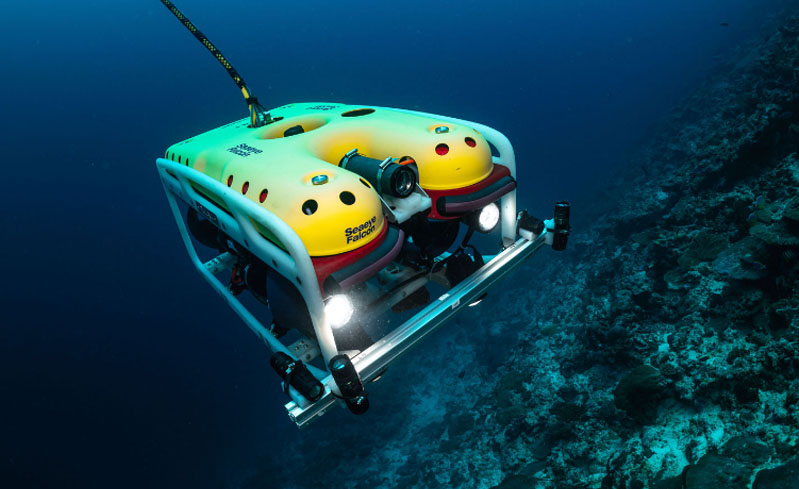
ROV (Remotely Operated Vehicle) systems
Location: External frame (depth) or hydraulic circuits
Prevents: Navigation errors, hydraulic failure, and overload conditions
Deep ocean research and oceanography
Location: Sensor packages and instrument frames
Prevents: Data inaccuracies and sensor drift over long deployments
Subsea control modules (SCM)
Location: Hydraulic and control system lines
Prevents: Control failure, valve malfunction, and system instability
Leak detection and pressure monitoring systems
Location: Critical junctions and sealed enclosures
Prevents: Undetected leaks and catastrophic system failure
Naval and defense subsea systems
Location: Hulls, sonar systems, and subsea equipment
Prevents: Structural failure and mission-critical system faults
Download:
Frequently Asked Questions (FAQ)
1. What is a subsea pressure transducer?
A subsea pressure transducer is a sensor designed to measure pressure underwater, often at extreme depths, converting pressure into an electrical signal (analog or digital) for monitoring and control systems.
2. What makes Silicon-on-Sapphire sensors better for subsea use?
Silicon-on-Sapphire technology offers:
- Higher stability over time
- Better temperature performance
- Minimal hysteresis
3. Can the PR3930 be used in long-distance subsea networks?
Yes. The RS-485 interface supports communication distances up to 1200 meters and allows multiple sensors on a single network using unique addresses.
4. Is this sensor suitable for permanent underwater installation?
Yes. The PR3930 is fully welded and hermetically sealed, making it suitable for continuous long-term subsea deployment.
5. Are calibration and test certificates available?
Yes. Units can be supplied with hyperbaric test certificates and calibration data upon request.