
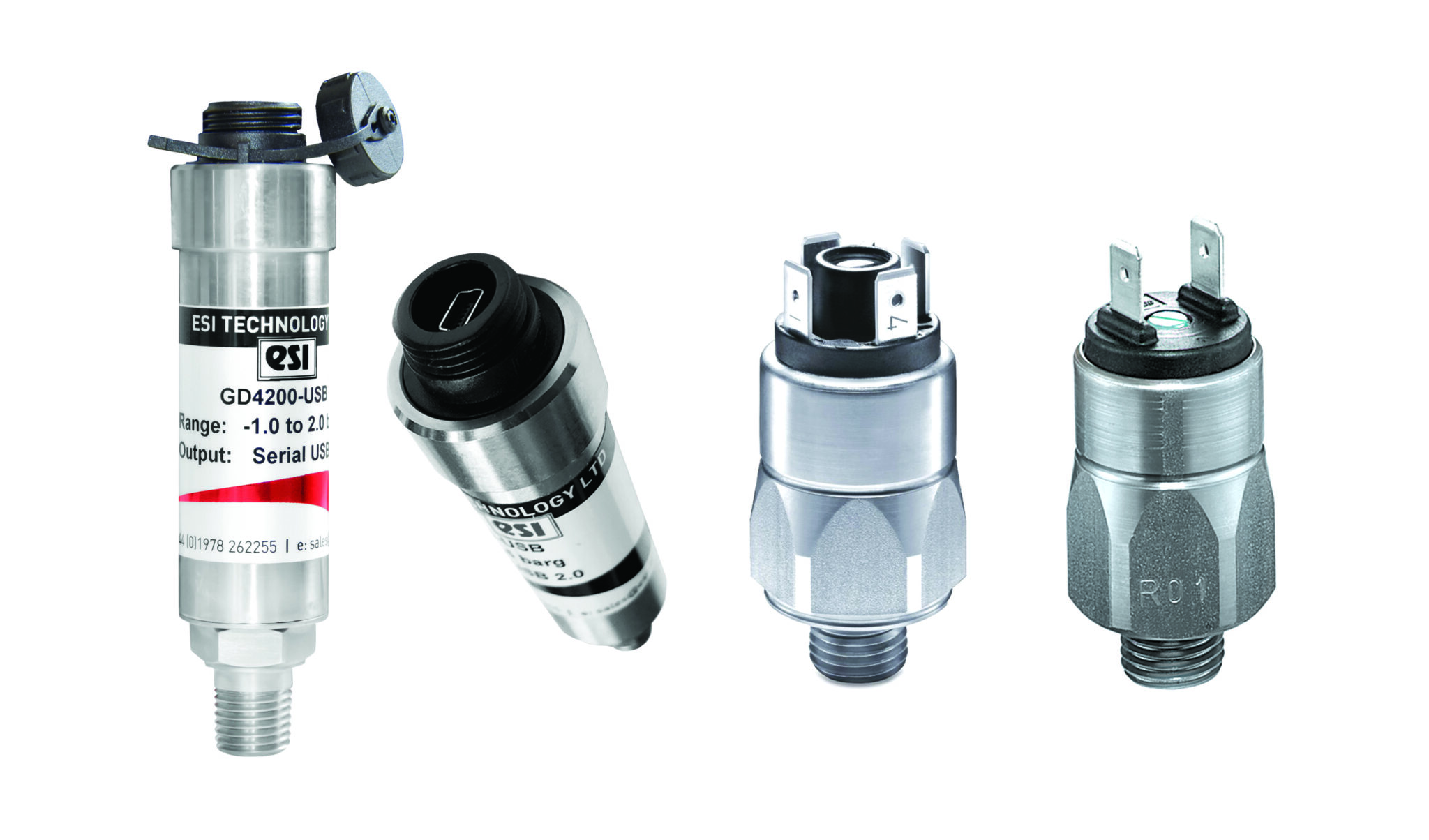
In industrial pressure measurement, terminology matters. Using “pressure sensor,” “pressure switch,” and “pressure transducer” interchangeably can lead to costly specification errors, system failures, and safety risks. While these devices all monitor pressure, they serve fundamentally different purposes in control systems, data acquisition, and process safety applications. Understanding these distinctions is critical for engineers selecting components for oil and gas installations, aerospace systems, construction equipment, and hazardous environments where performance and reliability are non-negotiable.
Defining Pressure Sensors: The Foundation of Pressure Measurement
A pressure sensor converts mechanical pressure into an electrical signal, detecting changes and producing a corresponding output, often using advanced technologies like Silicon-on-Sapphire (SOS) for exceptional temperature stability, low hysteresis, and high resistance to shock and vibration.
- Provides continuous signals such as:
- 4-20 mA current loops for long-distance industrial communication
- 0-10V or 0-5V voltage signals for shorter cables and benchtop use
- Digital protocols like CANbus, IO-Link, or Modbus for smart sensor integration
- Enables precise monitoring, data logging, and process control.
- Commonly used in aerospace, hydrogen fueling stations, and other industries for real-time pressure measurement and safety.

Pressure Switches: Binary Decision-Making Devices
A pressure switch differs fundamentally from a continuous-output sensor by providing a binary on/off signal when pressure crosses a predetermined setpoint. Rather than transmitting the exact pressure value, a pressure switch makes a decision: it closes or opens an electrical contact based on whether pressure exceeds or falls below the configured threshold.
This binary operation makes pressure switches ideal for alarm conditions, pump control, and safety interlocks. When a hydraulic system in construction equipment reaches maximum allowable pressure, a pressure switch immediately signals the control system to activate relief valves or shut down pumps—no signal processing or interpretation required.
Mechanical vs Electronic Pressure Switch Technology
Traditional mechanical pressure switches use a diaphragm or piston connected to a snap-action microswitch. As pressure increases, the diaphragm deflects until it triggers the switch mechanism. These devices require no external power and offer inherent reliability, making them suitable for fail-safe applications in hazardous areas with ATEX and IECEx certifications.
Electronic pressure switches integrate a pressure sensor with programmable switching logic and solid-state outputs. These advanced devices offer adjustable setpoints, hysteresis control, and multiple switching points from a single unit. In oil and gas wellhead monitoring, electronic pressure switches can provide both high-pressure alarms and low-pressure warnings, replacing multiple mechanical switches with a single compact device.
Critical Pressure Switch Specifications
When selecting pressure switches, engineers must consider parameters beyond simple setpoint pressure:
- Switching differential (hysteresis): The pressure difference between switch activation and deactivation prevents rapid cycling near the setpoint
- Repeatability: How consistently the switch activates at the same pressure across thousands of cycles
- Contact rating: Maximum voltage and current the switch contacts can safely handle
- Proof pressure: Maximum pressure the switch can withstand without permanent damage
- Switching speed: Response time from pressure change to contact actuation, critical in safety systems
For hazardous area applications, pressure switches must meet specific enclosure ratings and explosion protection requirements. ATEX-certified pressure switches for Zone 1 gas environments incorporate intrinsically safe designs or flameproof enclosures that prevent ignition sources from escaping even during internal failures.

Pressure Transducers: Precision Signal Conversion
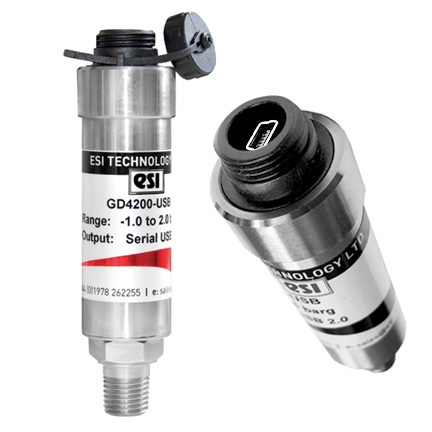 The term “pressure transducer” technically refers to a complete device that includes both a sensing element and signal conditioning electronics that convert the sensor output into a standardized, calibrated signal. In practice, pressure transducers provide industrial-standard outputs like 4-20 mA or 0-10V that can connect directly to PLCs, data acquisition systems, and control instrumentation.
This distinction matters: a bare pressure sensor produces a raw millivolt signal requiring amplification, linearization, and temperature compensation. A pressure transducer handles these functions internally, delivering a conditioned signal ready for system integration. For engineers specifying components, pressure transducers reduce integration complexity and eliminate external signal conditioning requirements.
Advanced Signal Processing in Modern Transducers
Contemporary pressure transducers incorporate sophisticated digital signal processing capabilities:
- Multi-point linearization correcting for non-linear sensor response across the full pressure range
- Temperature compensation algorithms maintaining accuracy from -40°C to +125°C or beyond
- Digital filtering to reduce electrical noise in electromagnetically harsh environments
- Self-diagnostics detecting sensor degradation, wiring faults, or out-of-range conditions
In subsea oil production, pressure transducers must deliver accurate readings while subjected to high hydrostatic pressure, extreme temperature cycling, and corrosive seawater exposure. SUCO ESI subsea transducers such as the PR3913, PR3914 and PR3920 use Silicon-on-Sapphire sensing technology and are rated for submersion to 3,000 meters.
Reach out to SUCO ESI North America technical specialists today to find the ideal pressure solution for your unique requirements.
Email: sales@sucoesi.com | Phone: 1-561-989-8499
Selecting the Right Device: Application-Driven Decision Making
Choosing between pressure sensors, switches, and transducers depends on specific application requirements rather than arbitrary preferences.
Choose Pressure Switches When:
- The application requires simple on/off control or alarming functions
- System architecture demands intrinsically simple, fail-safe operation
- Cost constraints favor discrete switching over continuous monitoring
- Hazardous area classifications require minimizing electronic complexity
- Applications include pump control, compressor protection, or tank level indication
Choose Pressure Sensors or Transducers When:
- Process control systems require continuous pressure monitoring and closed-loop control
- Data logging and trend analysis demand recorded pressure values
- Multiple pressure thresholds must be monitored simultaneously through software logic
- High accuracy and resolution are critical for product quality or safety certification
- System integration requires standardized industrial communication protocols
In hydrogen fuel cell testing, continuous pressure monitoring with ±0.5% accuracy is essential for characterizing performance curves and detecting membrane degradation. A pressure transducer with 4-20 mA output provides the necessary resolution and integration capability. Conversely, the same system might employ pressure switches for emergency shutdown when pressure exceeds safe limits—a redundant safety layer independent of the control system.
Hybrid Solutions: Pressure Switches with Analog Outputs
Modern industrial requirements increasingly demand both continuous monitoring and switching functions. Advanced pressure measurement devices now integrate sensor and switch capabilities in single packages, providing both analog output signals and configurable switching contacts.
These hybrid devices reduce installation complexity, panel space, and potential leak points in pressurized systems. A single ATEX-certified unit can replace separate sensor and switch installations, simplifying hazardous area documentation and reducing certification costs. In mobile hydraulics for construction equipment, space constraints make combination devices particularly valuable.
Safety and Compliance Considerations

Regulatory compliance guides pressure device selection in oil & gas, chemical, and hydrogen applications. ATEX and IECEx certifications define explosion protection for hazardous areas.
Pressure transducers use intrinsically safe (Ex ia) designs with limited energy, requiring barriers or isolated power but allowing flexible maintenance. Mechanical pressure switches often use flameproof (Ex d) enclosures, needing proper installation but no external barriers.
For SIL-rated safety systems, devices must meet reliability, diagnostic coverage, and risk reduction requirements.
Material Selection and Media Compatibility
The pressure-sensing element contacts process media directly, making wetted material selection critical for longevity and safety. Stainless steel diaphragms suffice for many hydraulic oil and water applications, but aggressive media demand specialized materials:
- Hastelloy for highly corrosive chemical processing environments
- Monel for seawater and marine applications requiring chloride resistance
- Titanium for weight-sensitive aerospace applications with corrosion exposure
- Ceramic for abrasive slurries in mining and mineral processing
Hydrogen applications present unique challenges due to hydrogen embrittlement of many metals. Specialized alloys and gold-plated surfaces prevent hydrogen permeation that degrades sensor performance and threatens structural integrity.
Frequently Asked Questions
Can a pressure sensor be used as a pressure switch?
Yes, with appropriate signal conditioning electronics. A PLC or control system can monitor the pressure sensor output and trigger switching actions when programmable thresholds are crossed. This approach provides flexibility for multiple setpoints and remote adjustment but introduces potential failure modes in the control logic and power supply that dedicated pressure switches avoid.
What accuracy differences exist between pressure switches and transducers?
Pressure transducers typically offer ±0.25% to ±1.0% full-scale accuracy, while mechanical pressure switches provide ±2% to ±5% setpoint accuracy. The difference reflects functional requirements: transducers measure precise values while switches simply detect threshold crossings. Electronic pressure switches bridge this gap, offering switching functions with transducer-level accuracy.
How does temperature affect pressure measurement device performance?
Temperature impacts both the sensing element and signal conditioning electronics. Quality pressure transducers incorporate temperature compensation maintaining accuracy across operating ranges, while basic sensors may exhibit 2-3% error per 50°C temperature change. Silicon-on-Sapphire technology demonstrates superior temperature stability compared to conventional silicon, with minimal zero and span drift from -40°C to +150°C.
What maintenance do pressure measurement devices require?
Electronic pressure sensors and transducers typically require only periodic calibration verification—annually for critical applications, every 2-3 years for non-critical monitoring. Mechanical pressure switches need periodic actuation testing and contact inspection. All devices benefit from process port inspection for blockage, corrosion, or media buildup affecting measurement accuracy.
Contact Us
Understanding the differences between pressure sensors, switches, and transducers is key to optimizing system performance, safety, and reliability. Factors like pressure range, output signals, safety certifications, environmental conditions, and lifecycle costs all influence the right choice for your application.
Reach out to SUCO ESI North America technical specialists today to find the ideal pressure solution for your unique requirements.
Email: sales@sucoesi.com | Phone: 1-561-989-8499