
Guide to Downhole Pressure Measurement in Oil and Gas: Maximizing Accuracy and Reliability
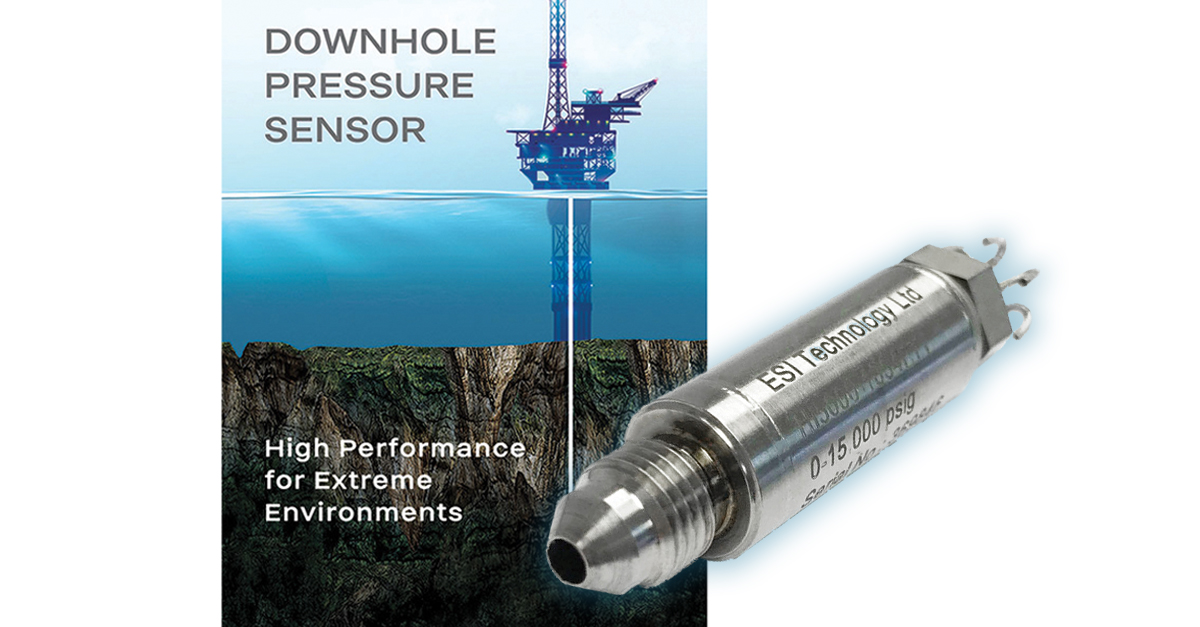
Accurate pressure measurement in oil and gas wells is essential for safety, efficiency, and reservoir management. Extreme downhole conditions; high pressures, high temperatures, and corrosive fluids—pose challenges that conventional instruments cannot withstand. The HI5000 Downhole Pressure Transducer is engineered to meet these challenges, providing real-time, reliable data in even the harshest environments.
1. Understanding Downhole Pressure Challenges
At depths exceeding 20,000 feet, drilling environments can expose equipment to:
- Temperatures up to 392°F (200°C)
- Pressures exceeding 20,000 psi (1,380 bar)
- Corrosive fluids, including sour gas and high-salinity formation waters
In these conditions, sensor reliability becomes critical for:
- Wellbore integrity – preventing kicks and blowouts
- Drilling efficiency – optimizing fluid density and penetration rates
- Reservoir evaluation – accurately characterizing formation pressures
The HI5000 transducer ensures data integrity where traditional sensors fail.
2. Technical Architecture for Extreme Conditions
The HI5000 Downhole Pressure Sensor employs Silicon-on-Sapphire (SOS) technology, which combines a thin silicon sensing layer with a sapphire substrate. This design offers:
- Exceptional thermal stability with minimal zero-point drift
- Resistance to media contamination and corrosive fluids
- Continuous operation at 392°F and pressures up to 29,000 psi (2,000 bar)
- Accuracy of ±0.25% full scale across its operating envelope
Its wetted materials—stainless steel housing with Hastelloy diaphragms; resist corrosion in sour and high-salinity environments. Hermetic sealing protects sensitive electronics from moisture and pressure medium intrusion, ensuring long-term reliability.

3. Applications in Drilling Optimization
Real-time downhole pressure data is essential for modern drilling techniques, particularly Managed Pressure Drilling (MPD). The HI5000 enables:
- Equivalent Circulating Density (ECD) Management – Adjust mud weight and flow rates to maintain optimal bottomhole pressure
- Kick Detection – Early identification of formation fluid influx to prevent blowouts
- Lost Circulation Identification – Detect pressure drops indicating fluid loss into formation fractures
- Formation Pressure Evaluation – Estimate reservoir pressure without extensive formation testing
Operators report that real-time transducer data can reduce non-productive time by 15–30% compared to conventional surface-based measurements.
4. Permanent Downhole Monitoring
For production wells, the HI5000 Downhole Pressure Sensor supports permanent downhole gauge (PDG) installations, providing continuous reservoir monitoring:
- Track pressure depletion and identify water/gas breakthrough
- Optimize artificial lift and production strategies
- Validate reservoir simulation models
- Monitor injection pressures in Enhanced Oil Recovery (EOR) operations, including steam injection, CO₂ flooding, and polymer treatments
The SOS sensor’s long-term stability ensures reliability for decades, avoiding costly workovers in offshore or deepfield installations.
5. Deployment Configurations
Downhole pressure transducers can be installed using multiple methods:
- Drill collars – for drilling near the bit, protected from impact
- Wireline or slickline memory gauges – record data for later retrieval
- Real-time telemetry – transmit data via mud pulse, electromagnetic systems, or wired drill pipe
- Permanent gauge carriers – mounted in production tubing with control lines for continuous monitoring
Deployment choice depends on the well type, monitoring requirements, and operational budget.

6. Selection Criteria
Choosing the right downhole transducer requires careful evaluation of:
- Pressure range – at least 20–30% above expected bottomhole pressures
- Temperature rating – continuous and intermittent extremes
- Accuracy and stability – including linearity, hysteresis, and long-term drift
- Media compatibility – resistance to H₂S, CO₂, brines, hydrocarbons, and treatment chemicals
- Shock and vibration resistance – withstand drilling and deployment stresses
- Signal type – 4–20mA, 0–5V, or digital protocols like Modbus
The HI5000’s extended ratings make it suitable for ultra-deep wells, HPHT reservoirs, and geothermal applications beyond conventional transducer limits.
7. Calibration and Quality Assurance
Reliable pressure measurements depend on thorough calibration:
- Factory calibration cycles sensors across pressure and temperature ranges
- Regular calibration for memory gauges, typically annually
- Permanent installations rely on initial accuracy and SOS stability
- QA includes thermal cycling, pressure shock testing, and accelerated life simulations
- Third-party certification (e.g., DNV GL) validates performance claims
8. Troubleshooting Common Issues
Downhole transducers can encounter:
- Zero-point drift – often due to seal degradation or media ingress
- Signal noise – caused by cable damage, grounding issues, or EMI
- Sudden failure – from overpressure or thermal shock
- Temperature-related inaccuracies – mitigated by SOS sensors with extended range and compensation algorithms
Proper selection and operational discipline reduce failure risk.
9. Integration with Digital Oilfield Systems
Modern operations integrate downhole data with SCADA, automation, and analytics platforms:
- Real-time pressure feeds enable automated drilling adjustments
- Machine learning predicts failures and detects anomalies
- Cloud-based platforms provide remote monitoring and performance optimization
- Standardized outputs ensure compatibility with existing control systems
10. Frequently Asked Questions
Q1: What types of pressure transducers exist?
- Absolute – measure pressure relative to a vacuum
- Gauge – measure relative to atmospheric pressure
- Differential – measure the difference between two points
Q2: Why do pressure transducers fail?
-
Overpressure, thermal stress, media incompatibility, electrical faults, mechanical shock, and normal aging
Q3: How does a pressure transducer work?
- Converts mechanical pressure to an electrical signal via piezoresistive or capacitive sensors
- Signal conditioning converts it to standard outputs (4–20mA, 0–5V, Modbus)
- Temperature compensation ensures accuracy across extremes
Q4: What is a downhole pressure and temperature gauge?
- Instrument measuring pressure and temperature inside wells
- Supports memory storage or real-time telemetry
- Applications: drilling optimization, well testing, production monitoring, and reservoir surveillance
11. Implementing Reliable Downhole Pressure Measurement
Achieving reliable data requires careful sensor selection, proper deployment, and ongoing validation. The HI5000 stands out for:
- Unmatched pressure and temperature tolerance
- Long-term stability with Silicon-on-Sapphire technology
- Proven performance in HPHT and ultra-deep wells
It enables confident decision-making for drilling optimization, well control, and reservoir management—reducing risks and maximizing operational efficiency.
At SUCO ESI North America, we understand the demanding environments you work in. With over 80 years of experience, we know that reliability and durability are critical. That’s why we’ve designed the HI5000 Downhole Pressure Transducer to deliver accurate, long-lasting performance, even in the harshest conditions.
Contact SUCO ESI North America for technical support and application assistance. We serve the US, Canada, and Latin America. Hablamos español.
 Email: sales@sucoesi.com
 Phone: 1-561-989-8499