

Types, applications, and selection tips for refrigeration pressure switches
Refrigeration systems depend on pressure switches to protect compressors, regulate system operation, and prevent costly failures. Whether it’s excessive discharge pressure, low suction pressure, or a refrigerant leak, the right pressure switch detects abnormal conditions before they cause equipment damage or downtime.
The main types of pressure switches used in refrigeration systems are:
- High-pressure switches
- Low-pressure switches
- Dual (combination high/low) pressure switches
- Differential pressure switches
Each type serves a specific protective function and is available in different designs, including diaphragm or piston sensing elements and mechanical or electronic actuation. Choosing the right pressure switch improves system reliability, efficiency, and long-term performance.
This guide explains how each type works, where it’s used, and how to select the right pressure switch for your refrigeration system.
High-Pressure Switches: Protecting the Compressor from Overload
 A high-pressure switch monitors discharge pressure on the high side of the refrigeration circuit and opens the circuit; cutting compressor power when pressure exceeds a set limit. This protects the compressor, condensing coil, and refrigerant lines from pressure-induced failure.
Common triggers for high-pressure trips include:
- Condenser fan failure or blocked airflow
- Non-condensable gases in the refrigerant circuit
- Refrigerant overcharge
- High ambient temperatures affecting heat rejection
High-pressure switches typically use a manual reset design; requiring a technician to physically reset the switch after a trip. That’s intentional. A high-pressure event indicates a condition that needs investigation before the system restarts. Auto-reset on a high-pressure switch would allow the compressor to cycle into repeated fault conditions, causing premature failure or refrigerant release.
Low-Pressure Switches: Detecting Undercharge and Loss of Refrigerant
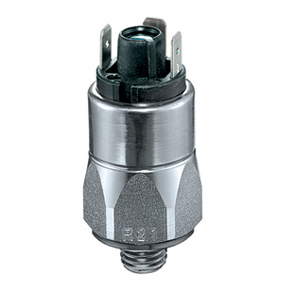 A low-pressure switch monitors suction-side pressure and shuts down the compressor when pressure drops below the setpoint. Its primary job is to protect the compressor from running with insufficient refrigerant; which leads to inadequate lubrication, overheating, and eventual burnout.
Low-pressure trips are commonly caused by:
- Refrigerant leaks reducing system charge
- Blocked or dirty evaporator coils
- Malfunctioning expansion valves
- Extremely low ambient temperatures affecting suction pressure
Low-pressure switches typically use an automatic reset; they re-engage once pressure recovers. This is appropriate because low-pressure conditions (like startup pull-down or temporary low ambient) can be transient. However, repeated low-pressure trips still warrant investigation.
For a deeper dive into how these switches operate at the mechanical level, this guide on how pressure switches work covers operating principles in practical detail.
Dual Pressure Switches: One Unit, Complete Protection
A dual pressure switch combines a high-pressure switch and a low-pressure switch in a single housing, monitoring both sides of the refrigerant circuit simultaneously. It’s the most common configuration in commercial refrigeration equipment because it reduces component count, simplifies wiring, and lowers installed cost without compromising protection.
Dual switches are standard on:
- Packaged rooftop HVAC/R (heating, ventilation, air conditioning, and refrigeration) units
- Split-system condensing units
- Walk-in cooler and freezer condensing units
- Commercial display case refrigeration
The high side typically uses manual reset; the low side uses automatic reset — matching the logic described above. Some dual switches allow independent adjustment of both setpoints, which is important when retrofitting existing equipment or working with non-standard refrigerants.
Differential Pressure Switches: Monitoring the Difference That Matters
A differential pressure switch doesn’t measure absolute pressure on one side — it measures the difference in pressure between two points in the system. In refrigeration, differential pressure switches are commonly used to monitor oil pressure in compressors, filter condition, and flow status.
The most critical application is compressor oil pressure protection. Reciprocating compressors rely on pressurized lubrication. If the differential between oil pump output and crankcase pressure drops below a safe threshold, the compressor bearing surfaces lose protection within seconds. A differential pressure switch detects this condition and shuts the compressor down before catastrophic failure occurs.
Differential switches are also used to detect clogged filter-driers and monitor refrigerant flow across evaporators. For system engineers designing protection strategies, selecting differential pressure switches for safety-critical applications requires careful attention to setpoint accuracy and response time.
SUCO ESI North America’s engineering team brings over 80 years of pressure control expertise to differential switch design; a background that directly informs switch performance in demanding refrigeration environments.
Construction Types: Diaphragm vs. Piston Sensing Elements
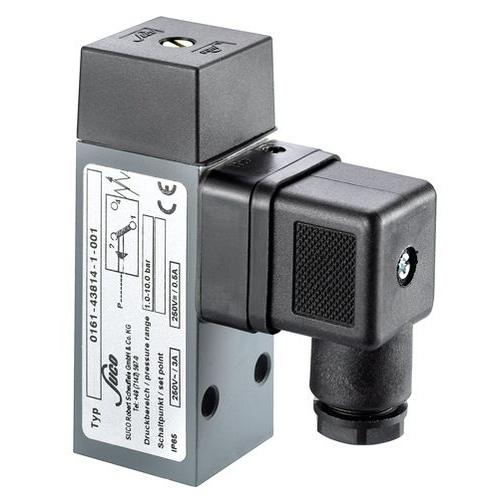 Beyond function, the sensing element inside a pressure switch determines its durability, sensitivity, and suitability for specific refrigerants.
Diaphragm Pressure Switches
Diaphragm switches use a flexible membrane that deflects under pressure, actuating the electrical contacts. They offer high sensitivity at lower pressures and are well-suited to R-410A, R-134a, and CO₂ systems. Diaphragm designs handle pressure cycling well and respond accurately to small pressure changes, making them the preferred choice for low-pressure sensing applications.
Piston Pressure Switches
Piston switches use a sliding piston to translate pressure into mechanical contact actuation. They handle higher pressures and more aggressive media with durability. In block-style designs — like those used in construction and industrial hydraulics — piston switches withstand vibration, pressure spikes, and harsh mounting environments that would fatigue a diaphragm over time. SUCO ESI North America’s block-style piston switches are an example of this construction applied to demanding industrial duty cycles.
For refrigeration applications involving high-side pressures or CO₂ transcritical systems (which operate at significantly higher pressures than conventional refrigerants), piston-type sensing elements offer a durability advantage worth evaluating.
Mechanical vs. Electronic Pressure Switches
Mechanical pressure switches use a physical snap-action mechanism a bimetal disc, microswitch, or relay actuated by the sensing element. Electronic pressure switches use a solid-state sensor to measure pressure and programmable logic to determine switching output.
Key differences in refrigeration context:
- Mechanical switches are simpler, lower-cost, and require no power to maintain state. They’re the standard choice for standalone compressor protection where setpoints are fixed and don’t need adjustment.
- Electronic switches offer adjustable setpoints, diagnostic outputs, and compatibility with building automation and BMS (Building Management System) integration. They’re preferred in larger chiller plants, supermarket refrigeration racks, and systems requiring remote monitoring.
If you’re weighing both approaches for a specific application, this comparison of mechanical vs. electronic pressure switches covers the decision criteria in depth.
Comparison Table: Pressure Switch Types in Refrigeration
| Type | What It Senses / Does | Typical Refrigeration Use | Reset Type / Notes |
|---|---|---|---|
| High-Pressure Switch | Monitors discharge (high-side) pressure; opens on overpressure | Compressor protection from condenser issues, overcharge | Manual reset; requires technician investigation |
| Low-Pressure Switch | Monitors suction (low-side) pressure; opens on pressure drop | Refrigerant leak detection, evaporator protection | Automatic reset; trips are often transient |
| Dual Pressure Switch | Combines high- and low-pressure monitoring in one unit | Packaged units, split systems, walk-in condensing units | High side manual / Low side auto; reduces component count |
| Differential Pressure Switch | Measures pressure difference between two system points | Compressor oil protection, filter monitoring, flow status | Manual or auto; critical for compressor longevity |
| Diaphragm Switch | Flexible membrane sensing element; high sensitivity | Low-pressure suction monitoring, R-410A/R-134a systems | Better for lower pressures; fatigue-sensitive to spikes |
| Piston Switch | Sliding piston sensing element; robust construction | High-side monitoring, CO₂ transcritical systems | Handles higher pressures, vibration, aggressive media |
Selecting the Right Switch: Practical Decision Points
Matching a pressure switch to a refrigeration application comes down to four questions:
- What refrigerant? CO₂ transcritical systems operate at pressures above 1,450 psi — far beyond conventional refrigerants. Verify that both the sensing element material and pressure rating are compatible.
- Fixed or adjustable setpoints? OEM equipment with fixed operating ranges can use pre-set mechanical switches. Systems with variable load profiles or multiple refrigerant options benefit from adjustable electronic switches.
- Standalone or integrated? If the system connects to a BMS or remote monitoring platform, electronic switches with digital outputs are required. Standalone compressor protection works fine with mechanical designs.
- Operating environment? Outdoor condensing units, refrigerated transport, and ammonia systems each impose conditions — vibration, temperature extremes, chemical exposure — that affect which construction type survives long-term.
For engineers who want to avoid the common specification errors that lead to early failures, reviewing the 7 critical mistakes when selecting industrial pressure switches is a useful pre-spec checklist.
Frequently Asked Questions
What are the four types of pressure?
In engineering contexts, the four main pressure measurements are: absolute pressure (measured relative to a perfect vacuum), gauge pressure (relative to atmospheric pressure), differential pressure (the difference between two pressure points), and sealed gauge pressure (referenced to a sealed chamber rather than atmosphere). Refrigeration pressure switches typically operate on gauge or differential measurement principles.
What are the three main types of switches used in refrigeration?
The three most common are the high-pressure switch, low-pressure switch, and dual (combination) pressure switch. Differential pressure switches are a fourth type used specifically for compressor oil protection and filter monitoring; less universal but critical in systems with lubricated compressors.
Which pressure switch do I need for a walk-in cooler vs. a chiller?
A walk-in cooler condensing unit typically uses a dual pressure switch — combining high- and low-pressure protection in one compact unit. This suits the simpler, fixed-setpoint design of standalone condensing units. A large chiller plant often uses separate high- and low-pressure switches with adjustable setpoints, plus differential pressure switches for oil protection and filter monitoring, frequently wired into a central BMS for remote diagnostics.
What is a dual pressure switch?
A dual pressure switch is a single device that integrates both a high-pressure cutout and a low-pressure cutout in one housing. It monitors both sides of the refrigerant circuit simultaneously, reducing component count and wiring complexity. The high-pressure side uses manual reset; the low-pressure side typically uses automatic reset.
What is the most widely used pressure switch in refrigeration?
The dual pressure switch is the most widely deployed type in commercial refrigeration because it provides complete circuit protection in a single, wiring-efficient package. It’s standard across packaged rooftop units, split condensing systems, and walk-in cooler applications globally.
Work With Engineers Who Understand the Details
Refrigeration pressure switches are not interchangeable. The right type, construction, and setpoint range directly affect system uptime, compressor life, and regulatory compliance; especially as CO₂ and natural refrigerant systems push operating pressures higher than conventional HVAC/R designs ever encountered.
SUCO ESI North America designs and manufactures pressure switches for demanding industrial and commercial applications, with an 80+ year engineering legacy behind every product. Whether you’re specifying switches for a new OEM product line or troubleshooting protection failures in an existing system, our engineering team is available to help you select the right solution.
Contact SUCO ESI North America to discuss your application or request technical support.
Email: sales@sucoesi.com | Phone: 561-989-8499