Description
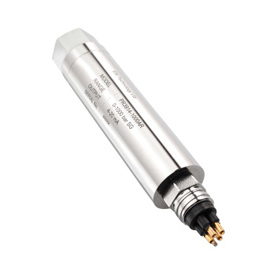
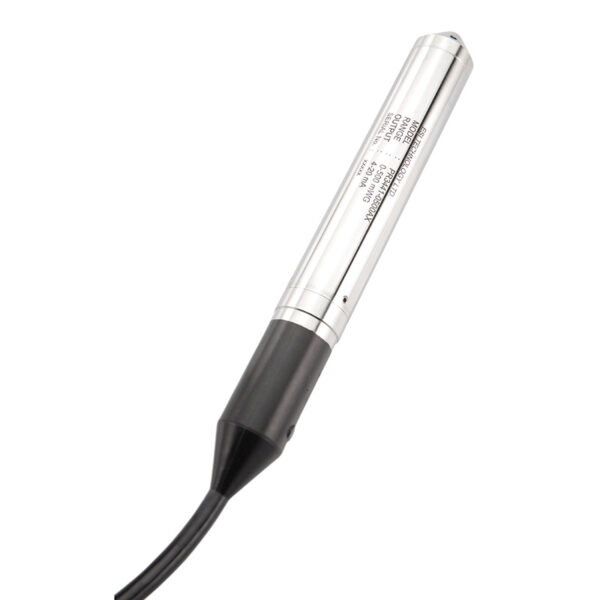
The PR3915 is built for subsea jobs where reliability is critical. With two independent sensors inside one unit, it keeps working even if one side fails. It’s designed for direct valve mounting and delivers stable, accurate pressure readings in deepwater and harsh offshore conditions.
Features
- 4-20 mA two-wire output
- Pressure ranges up to 1,000 bar (15,000 psi)
- Rated for submersion to 3,000 meters (10,000 ft)
- Dual redundant sensors and electronics
- High accuracy option available
- Hyperbaric tested to 3,300 meters
- Environmental Stress Screening (ESS) on every unit
Built for Real Subsea Conditions
At the core of the PR3915 is our Silicon-on-Sapphire sensing element. This isn’t a standard sensor. It’s designed to handle high pressure, temperature changes, and long-term exposure to harsh environments without drifting.
The sensing element is made by growing a silicon strain gauge directly onto a sapphire diaphragm. That structure is then bonded to a titanium alloy sub-diaphragm. The result is a very strong, stable sensor that can take over-pressure events and resist corrosion far better than conventional designs.
In practical terms, this means:
- Very stable readings over time
- Minimal drift, even with temperature changes
- No noticeable hysteresis
- Strong resistance to corrosion and fatigue
Why Dual Redundancy Matters
In subsea systems, access is limited and downtime is expensive. The PR3915 uses two separate sensing systems in one unit. Each has its own electronics and output path.
This gives you:
- Backup in case one channel fails
- Continuous operation without interruption
- Added safety for critical valve control applications
Designed for Valve Mounting
The PR3915 is built to mount directly onto standard subsea valve flange arrangements used in the oil and gas industry. That keeps installation clean and reduces potential leak paths.
Applications
The PR3915 is used in subsea environments where pressure feedback is critical and failure is not acceptable. It’s mainly used in offshore oil and gas, but it also fits other deepwater systems.
Industries:
- Offshore oil and gas (subsea production systems)
- Subsea energy and infrastructure
- Offshore drilling and well intervention
- Deepwater research and marine systems
Typical Equipment & Systems:
- Subsea control valves (direct-mounted)
- Hydraulic control systems
- Blowout preventers (BOPs)
- Subsea manifolds
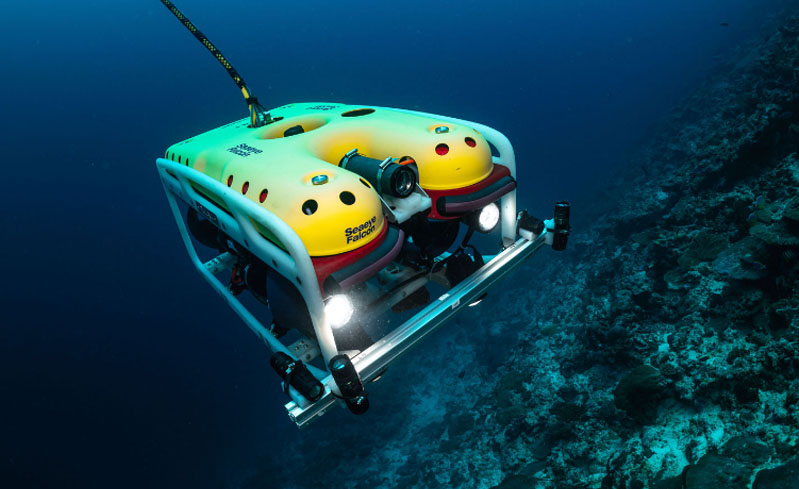
- ROV (remotely operated vehicle) support systems
- High-pressure test and monitoring equipment
FAQ
What does dual redundant mean in this sensor?
It means there are two completely independent pressure sensors inside one unit. Each can operate on its own, so if one fails, the other continues to provide a signal.
Can this sensor really operate at 3,000 meters depth?
Yes. It’s designed and tested for that depth, and each unit is hyperbaric tested beyond its rated limit to ensure reliability.
What output signal does it use?
It uses a standard 4–20 mA two-wire output, which is widely used in subsea and industrial control systems.
What makes Silicon-on-Sapphire better than other sensor types?
It offers better stability, handles higher pressures, resists corrosion, and performs well across a wide temperature range without drifting.
Is it suitable for long-term subsea deployment?
Yes. The materials and design are chosen specifically for long-term use in harsh offshore environments.

 Atex Certificate